
GEO for Financial Advisors: How to Get Your Practice Recommended in ChatGPT and AI Search
HNW clients are asking AI tools to recommend financial advisors. Most practices don’t appear. This guide explains GEO and what it takes to show up.

Know more about SaaS growth strategies from the horse’s mouth.
The competition in the B2B SaaS domain is getting stiffer each day. The global SaaS market size is projected to reach USD 307.3 Billion by 2026, from USD 158.2 Billion in 2020 (CAGR – 11.7% during this period). This figure will continue to grow as organizations across the globe adopt SaaS solutions to speed up internal processes and improve their overall response time.
This thriving domain is attracting several players who wish to get a piece of the pie. Hence, to succeed in this competitive scenario businesses need a full-bodied marketing strategy that’ll help them flourish in this scenario.
For SaaS businesses, content marketing is a staple channel that boosts brand awareness, drives organic traffic, and educates the audience. Hence, it is the foundation of the SaaS inbound marketing strategy.
Semrush’s State of Content Marketing 2022 Global Report points to the fact that 81% of businesses with unsuccessful content efforts do not have a documented content strategy. This clearly emphasizes the significance of having a clear content strategy and processes for achieving business goals.
In this post, we will share how you can build an infallible content marketing strategy to fuel business growth and ensure sustained returns.
Let’s dive in!
Building a content marketing strategy for a SaaS business requires meticulous planning. Before getting into the core strategy building, contemplate the following questions to analyze the state of your business.
To produce relevant content for your target audience, you need to understand your buyer persona and their content needs and preferences.
Determine the stage of the sales cycle your customers are in. Are they at the cusp of purchasing? If yes, they will need infinite product detail that pushes them to make a decision.
Map the customer touchpoints and determine their preferred communication channel.
Are you looking for traffic building or conversion optimization? Do you plan to acquire and nurture qualified leads? Do you want to empower your customer service or sales team?
All this and more can be achieved through effective SaaS content marketing.
Content marketing experts suggest that organizations have a dedicated team to handle content marketing efforts. But that seldom happens. The result is that several teams end up contributing to the content marketing strategy.
If that’s the case, you need to think about –
SaaS audiences are constantly looking for content to read and consume. But you need to determine the type of content your target audience consumes. It could be product-led content, how-to posts, listicles, checklists, or even a what-is post.
Evaluate the top SaaS content types that will help you to achieve your goals across the buyer journey.Maybe your firm is investing too much in sprucing up the business website. Instead, you can invest in creating relevant buyer persona-centric content.
Or your organization could be investing a lot more in acquiring new leads than focusing on conversions. Probably there’s scope to tone down those investments and focus on conversion optimization through content.
The customer journey is the path through which a person comes in contact with a brand (through content) and eventually progresses to become a prospect and finally a customer. When we talk of content marketing, there are three stages of the customer journey that demand attention.
When people get to know about your offerings, they enter the awareness phase (top of the funnel). Hence, the content at this stage should be able to spark interest and leave them wanting more content.
At this stage, people aren’t ready to purchase, yet highly receptive to high-quality and reliable content that can help solve their problems. Hence, your content strategy should be to educate, contextualize, clarify, and inform the audience. This will help them better understand the challenges they are facing and the possible approaches to solving them.
Offer information that describes the issue they are facing, allowing them to contextualize it. Here at Growfusely, we try to create TOFU content that’s as detailed and educational as possible.
Check out these posts on our blog that focus on attracting SaaS visitors who are still trying to define or understand the issue they’re facing.
These titles cater to SaaS professionals experiencing issues but haven’t singled out a specific solution. Hence, by clicking on these posts, they can learn more about their issues and prepare them for the next step.
At this stage, the prospect is in the process of exploring solutions that could address their concern or frustration. They aren’t ready to purchase but eager to look at options.
Here, the content should help them learn about possible solutions. During the consideration stage, they are looking for information from you or your competitors. Hence, this is the time to share content in the form of product demos, white papers, ebooks, and webinars.
B2B SaaS players like SaaStr, Pipedrive, Drift, and Uberflip for instance are on the top of their marketing game through webinars. These brands are driving digital engagement through SaaS webinars and generating qualified leads.
Check out the Pipedrive Academy page. The CRM tool shares webinars that offer product walkthroughs for sales and marketing teams, allowing them to hone their skills.
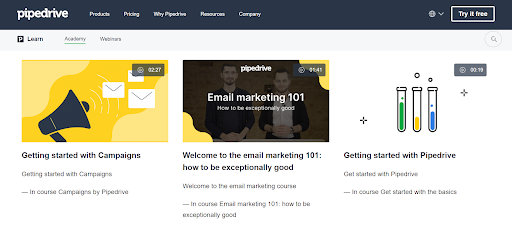
So, MOFU content usually focuses on getting rid of the roadblocks in the customer journey because they are willing to try new solutions.
The BOFU content focuses on people ready to make a purchase decision. It is here that you are positioning your product as the best solution in the market and persuading prospects to choose you over the competition. Compelling BOFU content helps prospects click on the ‘Try now’ or ‘Buy’ CTA.
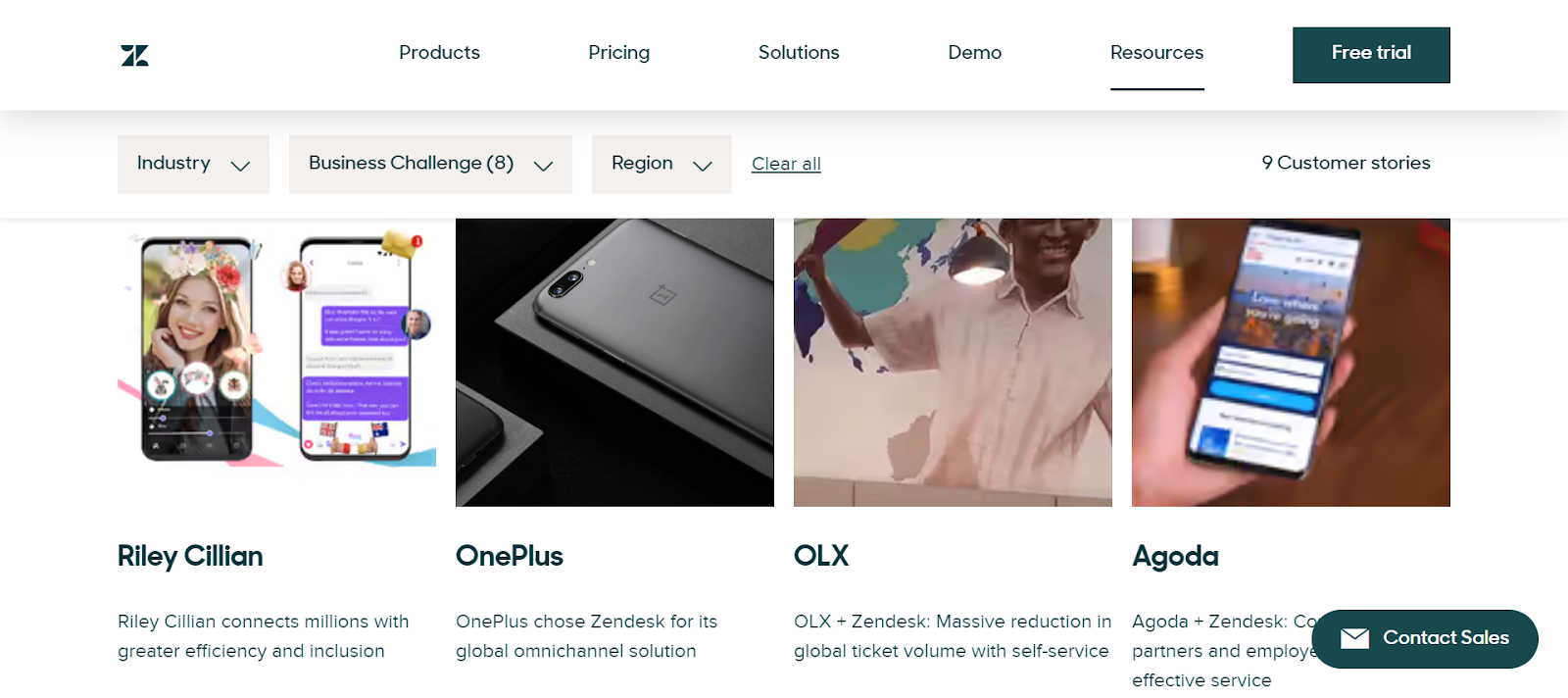
The content at this stage should share the merits of your product with clear evidence of how it has helped others in a similar situation. Share the expected results through case studies, videos, tutorials, and testimonials that give customers the trust and confidence to act.
So, creating separate web pages for customer stories and testimonials like Zendesk can help improve clicks, conversion rates, and purchases. Notice how the helpdesk software has leveraged eye-catching design and graphics, whitespace, and strategically-placed CTA to showcase their company value and encourage customer evangelism.
At its core, a content marketing strategy answers the,
However, we have penned down ten building blocks of a content marketing strategy that will help you build a strategy that reaches and converts your ideal customers.
The role of buyer personas in a content marketing strategy is undeniable. An adequate buyer persona helps marketers take the right approach when creating content that generates the most engagement and conversions.
Though buyer personas are fictional representations of the buyer, the data used to create them is taken from real consumers and their pain points. Hence persona-based content can help in creating TOFU, MOFU, and BOFU content that reaches users with specific content at the right time.
A content marketing strategy must include all possible users from those in the awareness phase to the ones about to make a decision. This will drive specific results in less time and huge volumes.
A winning content marketing strategy relies on a clear idea of what success looks like. Your goal may be improving brand awareness, building brand credibility, or generating leads. Regardless of what you want to achieve make sure your goal is specific with a clear timeline, allowing you to understand the impact of the campaign.
So, instead of saying your goal is to generate more leads, aim at a specific number of leads within a specific period. For instance, your goal could be to generate 2X leads within three months.
Data helps businesses understand the market scenario, their customers, and the competitive landscape.
For instance, the content shared by businesses generates data and insights. Similarly, social listening tools help them learn what their prospects think of their business and the industry.
This data helps marketers fine-tune their strategy and gain a competitive edge.
The buyer journey map outlines what your persona needs at each stage and how you can fulfill them. These maps aren’t linear; businesses tailor the journey to specific customer profiles and how they interact with them.
Typically, a customer journey map includes the buying process, user actions, pain points, and solutions.
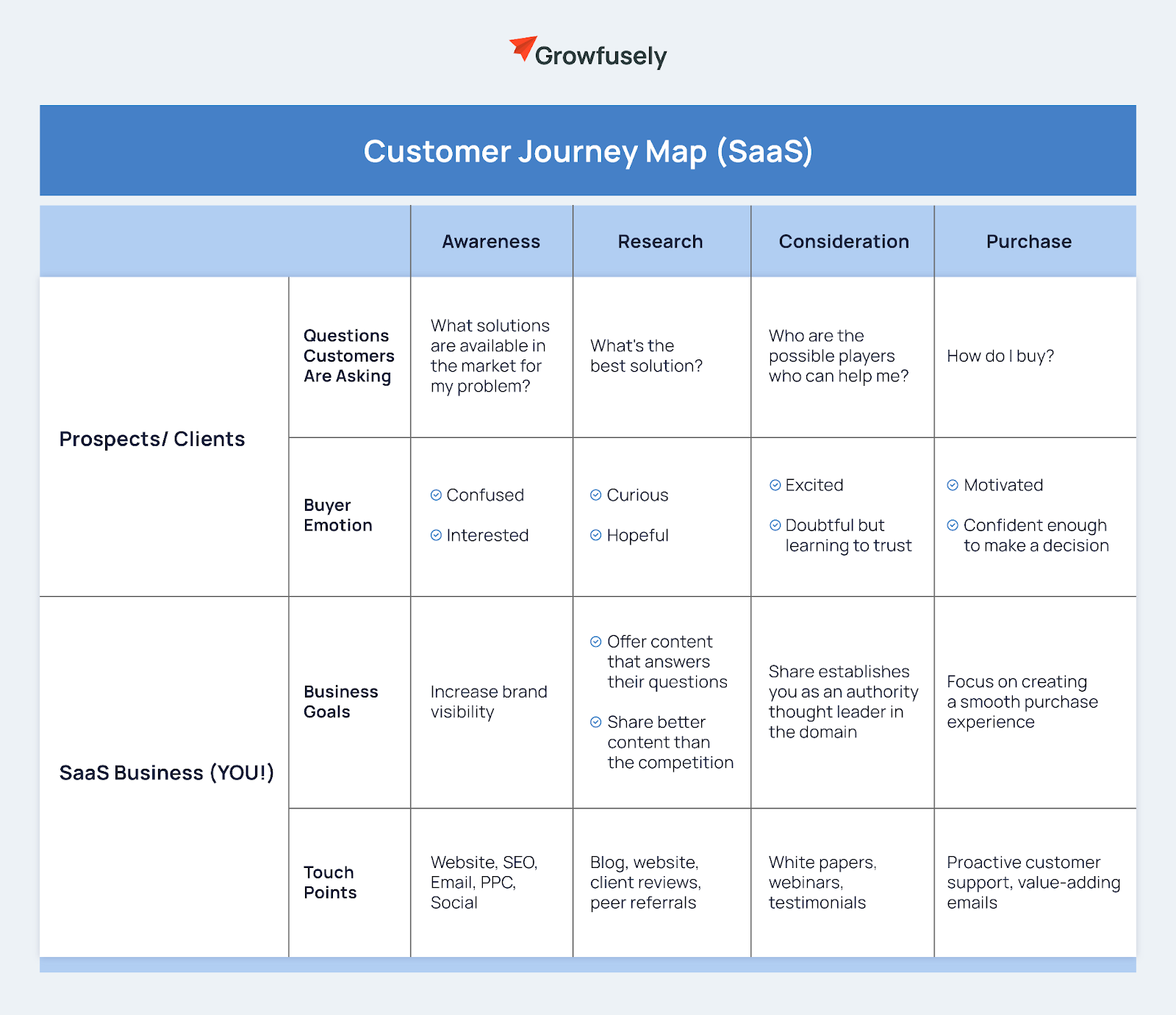
This journey map shares the steps in the process of buying a SaaS product. It offers an in-depth narrative of the entire experience from the user and business perspectives.
Jennifer Aaker, the General Atlantic Professor at Stanford Graduate School of Business shares that people remember exciting stories 22 times more than plain data and figures. That’s because narratives tap into human psychology and allow potential customers to connect with a brand.
So, it’s important to establish a common theme across your content strategy, thus creating a strong emotional connection between your brand and its audience.
Maersk, the Danish container shipping giant, has spent a few years focusing on its brand storytelling. Through their story, they share the firm’s vision to reign supreme in this digital era by adopting change.

A brand guideline or style guide ensures that each piece of content you share carries the same voice, tone, and appearance. As a business grows so does the team. Hence, it’s important to have a documented guideline that brings in consistency in aspects like language, tone, grammar, style, accessibility guidelines, and more. All this comes together to create a strong brand identity.
Each persona consumes content in various forms. Some may prefer looking up the blog content and others consume visual or audio content. Hence, your content marketing strategy should consider a diverse range of content that intriguing to different personas.
Infographics, ebooks, webinars, videos, and podcasts are a few content types that engage audiences at various stages of their buying journey.
For instance, posts, podcasts, and videos are useful at the awareness stage. Similarly, whitepapers are ideal for MOFU buyers and case studies for BOFU.
Paying attention to the content-market fit ensures that your content attracts and retains paying customers. The two most important aspects of content that marketers should pay attention to (before creating content) are findability and relevance.
The content should consider how prospects and existing customers will find it. If too much effort and time are invested on content that doesn’t get visibility, it’s a waste.
Secondly, the content should circle the audience’s interests, needs, and pain points.
Besides, you need to count on the current state of the industry, the state of media behavior, content consumption habits, device usage, and visual trends.
A robust communication plan can help your entire content team and other stakeholders align with the strategy and stay engaged. Your communication plan should answer the following questions.
For instance, you may have to invest in audience targeting to see which content format and channel suits your audience. Also, you’ll need to have contingency plans for roadblocks so that your team moves swiftly without delays.
A content calendar is a single piece of schedule that instills consistency and gives you a better perspective on the overall strategy. At the very least, content calendars should mention the content ideas, topics, dates, assigned owner and writer, and the list of channels it will be published on.
Terms like ‘marketing strategy,’ ‘content strategy,’ ‘content plans,’ and ‘content marketing strategy’ keep floating around us. What’s the difference between them?
To begin with, let’s look at the difference between content strategy and content marketing strategy.
Content strategy is at a higher level than content marketing because it is a roadmap guiding a firm’s content marketing efforts. Thus, content strategy encompasses all the ‘planning’ and decisions made to connect with the target audience through content.
Thus, it answers the questions like –
Content marketing strategy involves ‘action’ – performing the tasks like organizing, scheduling, crafting, and publishing content and promoting it on various platforms.
Thus, a content strategy ensures that your content efforts align with business goals and get the audience impact you are aiming for.
A winning content marketing strategy answers three key questions –
These questions are enough to determine all the ground you need to cover as a part of your content campaign.
To make it simpler, let me split this into micro chunks.
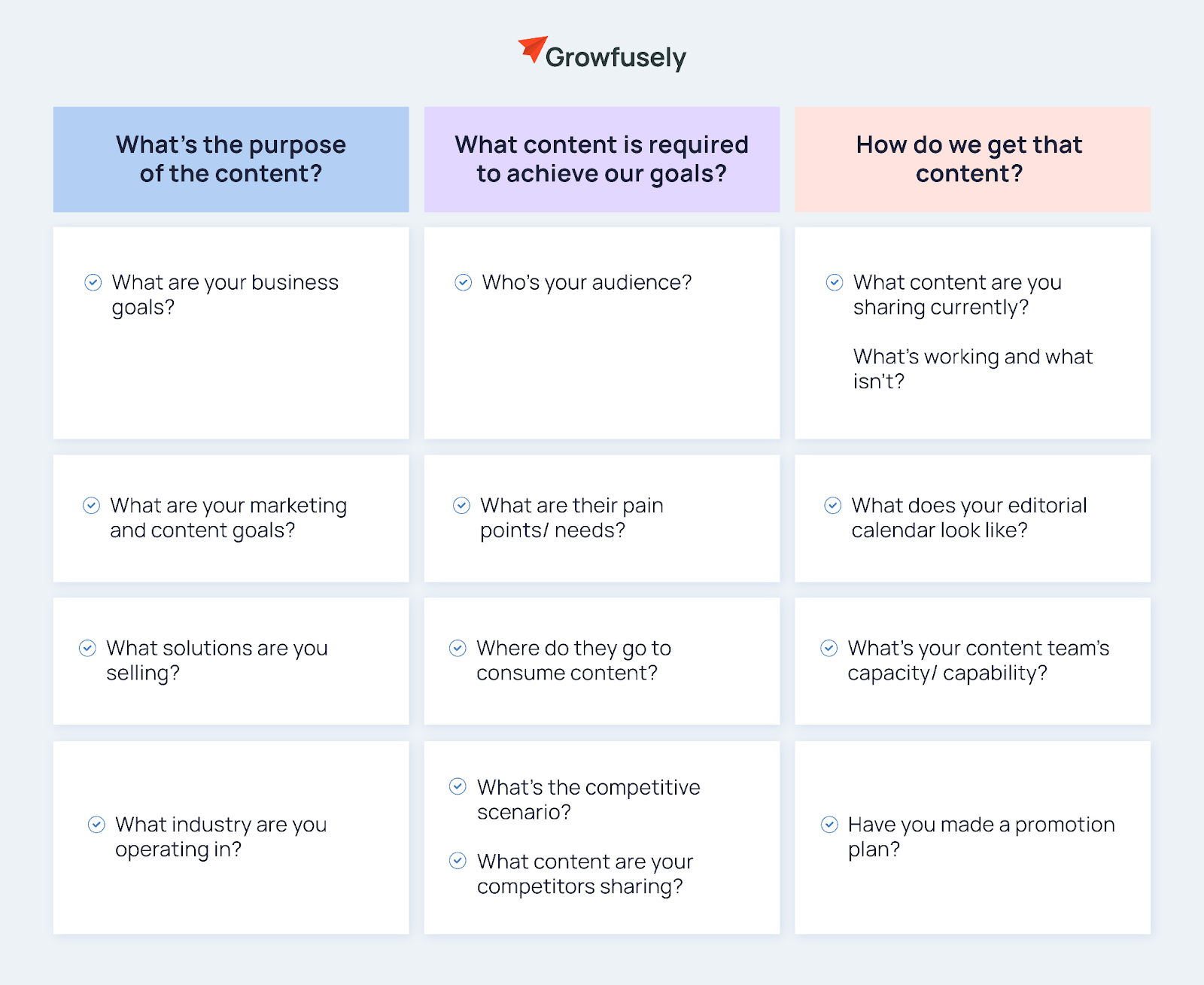
Once you are clear with the outline, you can move to define your content campaign goals.
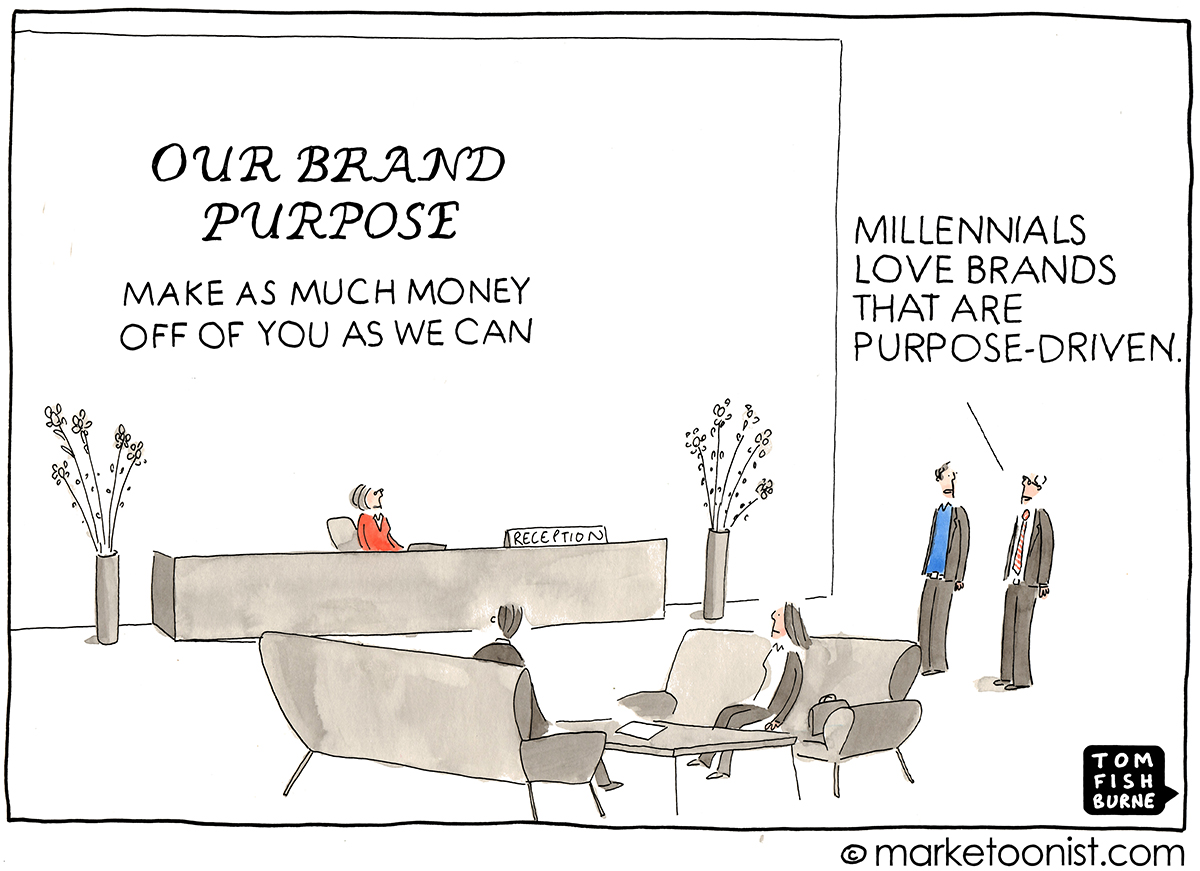
The first question we asked ourselves when working on the outline is about the purpose. The ‘Why?’ is the most foundational piece of your content marketing strategy.
So, take time to determine your content marketing goals but make sure they align with your business’s overarching goals, mission, and vision.
Here’s a great example of a goal with smaller objectives tied to it-
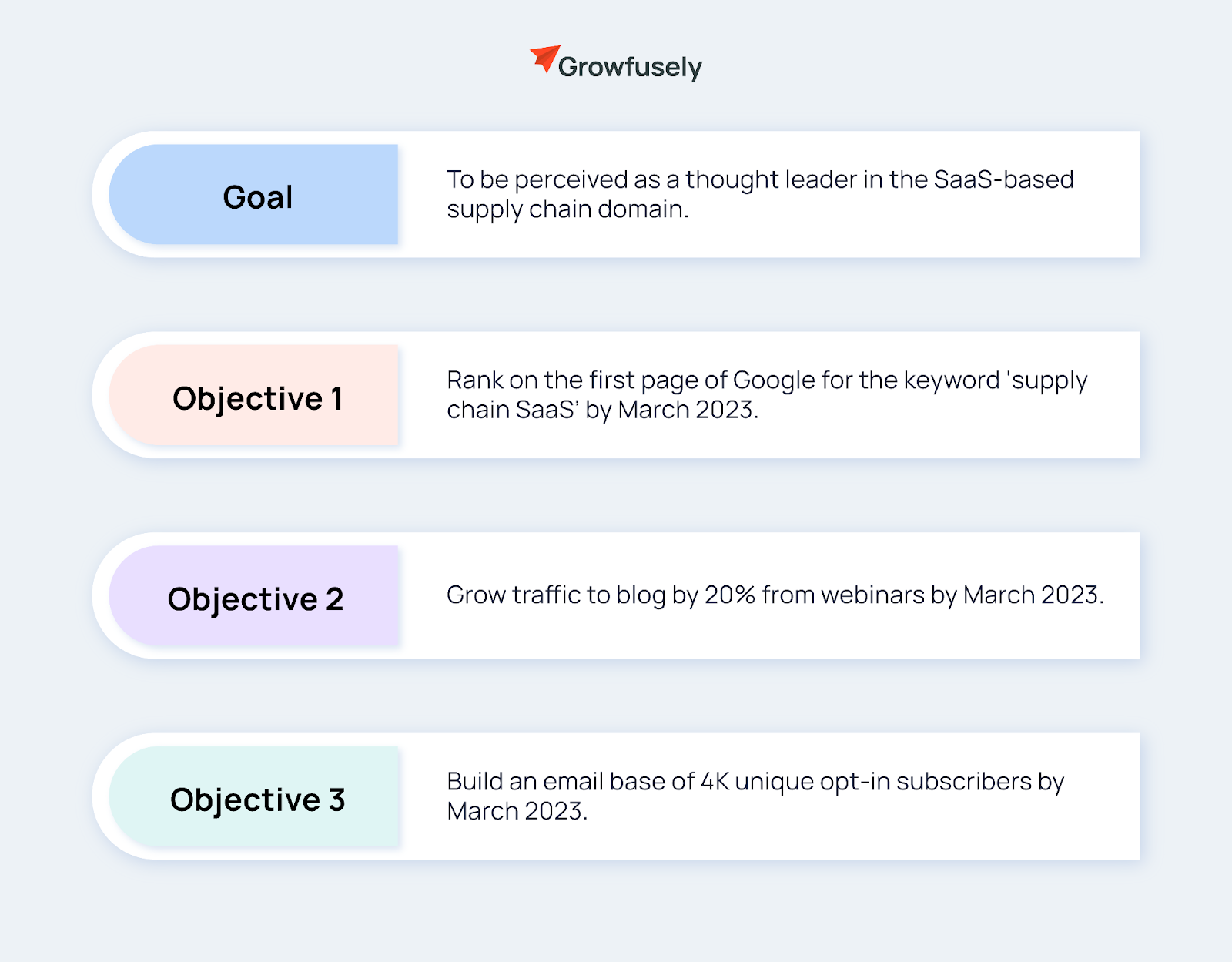
Typical goals include improving revenue and sales, getting more traffic, boosting social media engagement, and reducing marketing costs.
Once you have enlisted your goal, it’s wise to ask yourself and the team –
KPIs make goals specific and measurable while offering milestones that can be checked off. Consider including KPIs that help you measure your revenue, sales, SEO, and other aspects of marketing like email and social media.
Next, it’s time to determine who’s seeking or will be consuming your content. The buyer persona we discussed earlier in the post forms an excellent base for learning about the audience.
However, buyers aren’t the only audience we are looking at. The audience can be anyone interacting with your brand long before they decide to buy your product. But they have to potential to be repeat purchasers.
It’s essential to define the universe your brand is planning to create. Jay Acunzo, the founder and host of the podcast Unthinkable once attempted to define content marketing and I seem to quite agree with him.

Who is your audience and how can you help them? This question is at the heart of content marketing. Hence, it’s key to match your audience’s pain points, goals, and desires with your offerings.
Here are a few questions that can help you define your audience.
In the SaaS domain, what vertical are you aiming to serve? For instance, live chat is a large segment. Do you want to focus on live chat for ecommerce stores?
Focus on your audience’s needs and motivations. Your content shouldn’t just revolve around your business goals.
To channel your prospective buyers along the buyer journey you need to answer the questions they have. The number of questions will vary at each stage; however, the questions should be broad at the beginning and specific toward the end.
To get rich insights into what your audience thinks, collect feedback from existing customers. Determine their urgent needs and what they feel about your content. This will allow you to know their priorities and the best places they can be reached, thus sharpening your buyer persona.
As mentioned earlier, content marketers need to constantly think about how they can help the audience. Customer pain points fall into these categories –
All customers want to feel they are getting value for the money they’ve invested. No wonder, pricing is one of the most important and delicate aspects of customer experience.
This pain point can be determined by a simple survey including open-ended questions that procure qualitative customer feedback.
Businesses are looking at SaaS solutions that are designed for usability and versatility. They tend to move away from products that waste time or cause unnecessary friction.
Are there any aspects of your product that customers are complaining about? Does your platform have a steep learning curve?
SaaS solutions should make life easier for businesses, allowing them to use their time effectively.
For instance, if your platform onboarding isn’t seamless, it counts as a productivity pain point. In such a case, you must introduce quick tutorials or FAQs and prompt customer support to train the customer to use the product.
Process pain points are quite frustrating because it forces customers to endure what they hadn’t planned for. A customer would rather pay a premium for a product that’s easy to use, seamless, and helps solve their business problems.
To identify and prevent such pain points, perform a detailed customer need gap analysis. Needs drive purchase decisions. Is the customer looking for price, functionality, or usability? Or are customer support and data security their top priority?
The analysis allows businesses to view their solutions from the customer’s POV, enabling them to align their processes with the key pain points.
SaaS businesses, for instance, should ensure easy-to-use integrations with other platforms, allowing customers to simplify their processes when switching from one application to another.
For businesses adopting a customer-centric philosophy and awesome customer service and omnichannel support is a given. Support pain points involve customers trying out ways to contact your business with no success or having to wait for their query to be resolved. This could lead to frustration and loss of trust among customers.
Hence, it’s critical to make support available on various channels – social, email, live chat, phone, and more. In fact, streamlined conversational experiences across channels are central to customers completing purchase journeys. A Zendesk report shares that customers opted for new channels to reach out to brands and get their issues resolved.
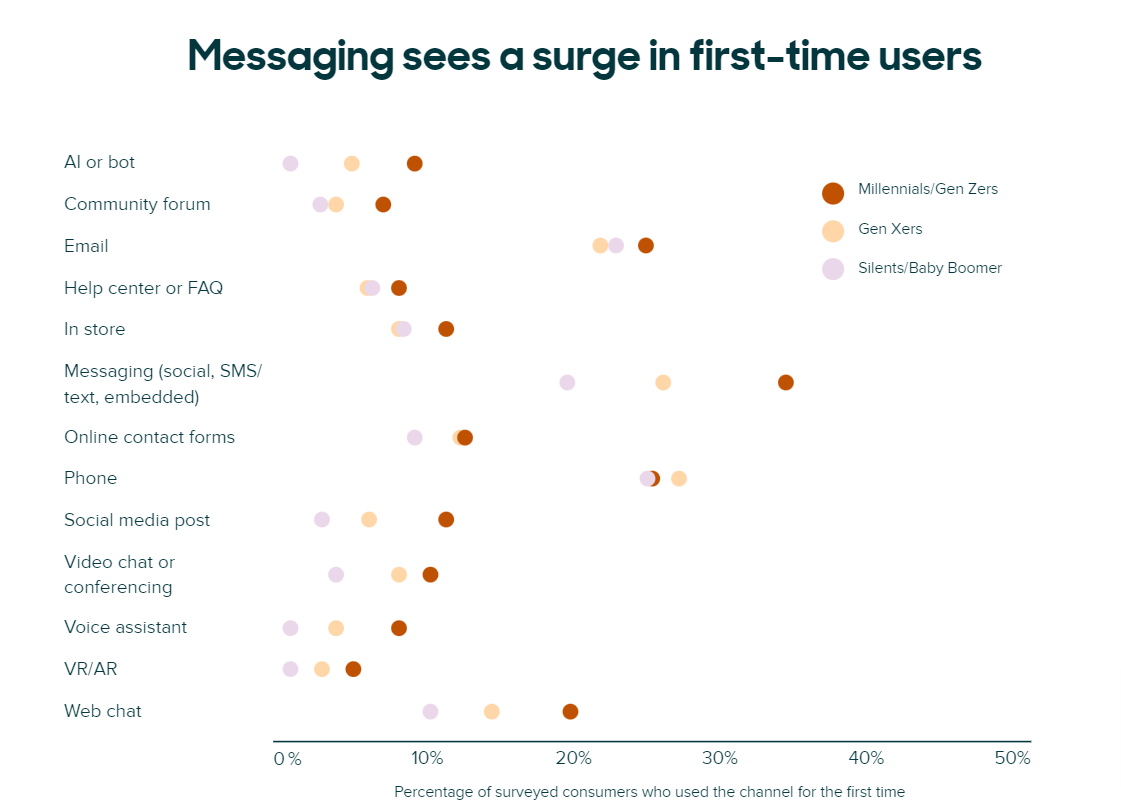
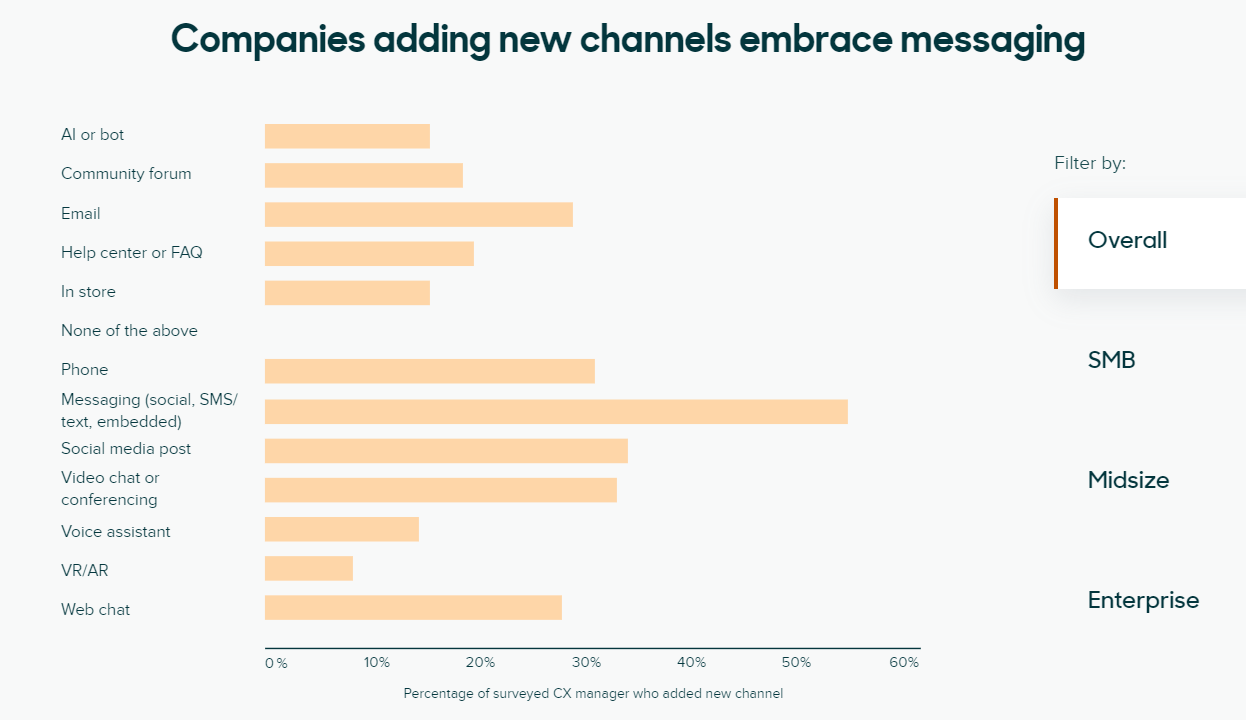
There can be multiple issues that can make your customer’s life tough. Identify the pain point and work out a solution to overcome them.
For instance, if you’ve identified a productivity pain point that your platform onboarding has unnecessarily long processes, introduce automation features or simply shorten the process.
Similarly, if there’s a process pain point like poor data exchange, invest in digitization or steamlike the process to make it seamless.
Audience content consumption is all about how your prospective client researches, discusses, reviews, reads, or watches content that helps them in making a purchase decision. Understanding where the audience is spending time allows businesses to optimize their marketing efforts and ad spending.
Social media is emerging as one of the top platforms for research on SaaS products. In fact, social influences 84% of C-level and VP-level buyers and 55% of B2B buyers mentioned that they look for information on channels like LinkedIn and Twitter.
Online review sites like G2 Crowd, TrustRadius, and Capterra are other places where SaaS buyers read authentic reviews about a variety of products.
Here are a few proven ways to understand where your customers go for content.
Your survey should include the following questions.
Web analytics – Take a look at what content your audience is interested in and the formats they prefer using tools like Google Analytics, SEMrush, and Ahrefs
For instance, Google Analytics Audience Overview Report shares insights into audience demographics, email subscriber demographics, device usage, interests, user behavior, average session duration on your site, pages per session, and more.

Besides understanding the type of content your audience prefers and where they get it, it’s important to track what your competitors are up to.
Determine –
To find out who your competitors are, we’d recommend using SEMrush which shows your website’s ranking for your target keywords. The tool shows you who’s getting organic and paid traffic for those keywords.
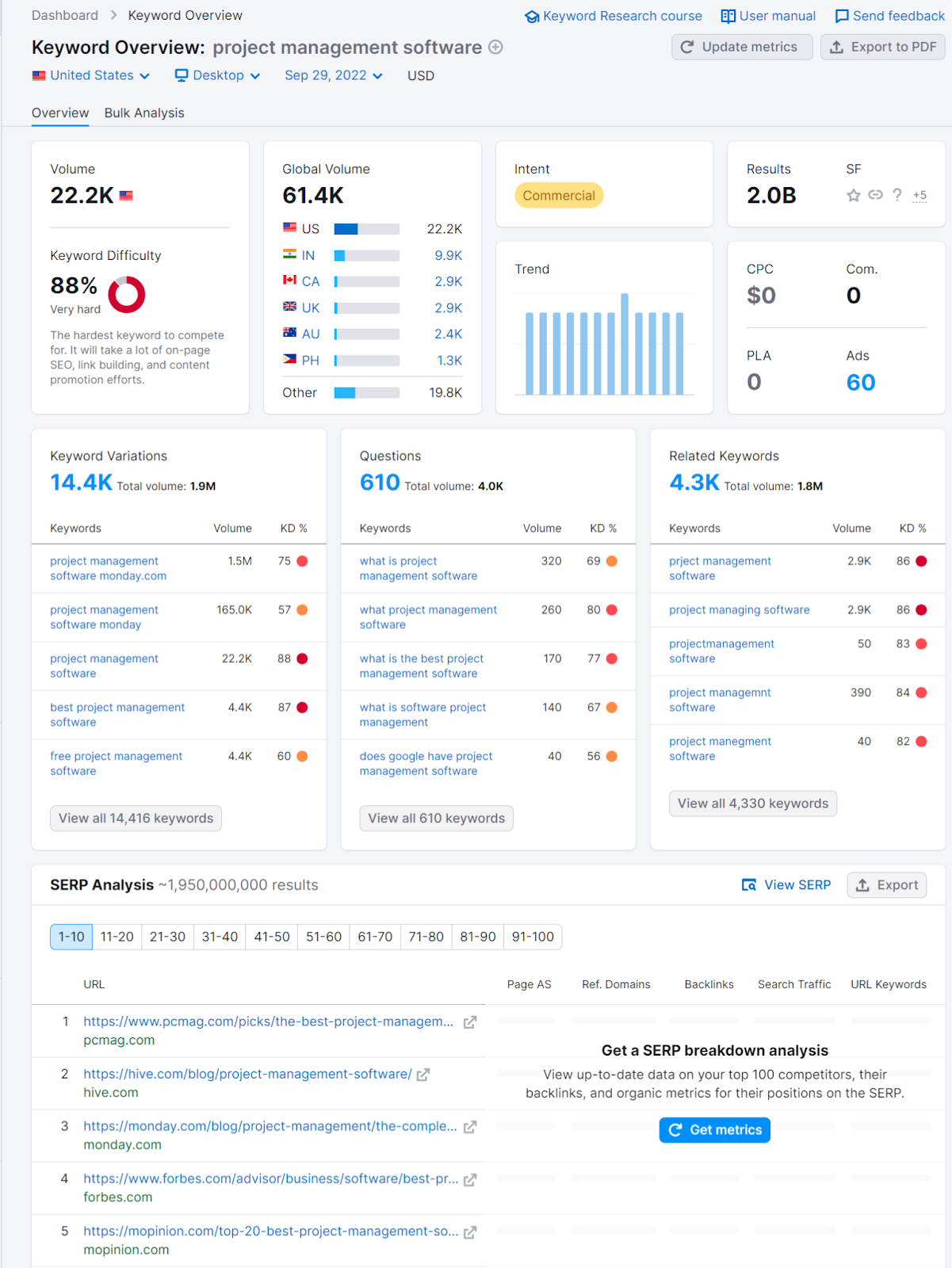
Using the data available on this dashboard you can determine –
Further, you can run granular research to check on your competitors’ content.
Content matrix is a mapping tool that allows marketers to create result-focused content that educates, convinces, entertains, and inspires the target audience. This scatter plot organizes content on a two-dimensional chart.
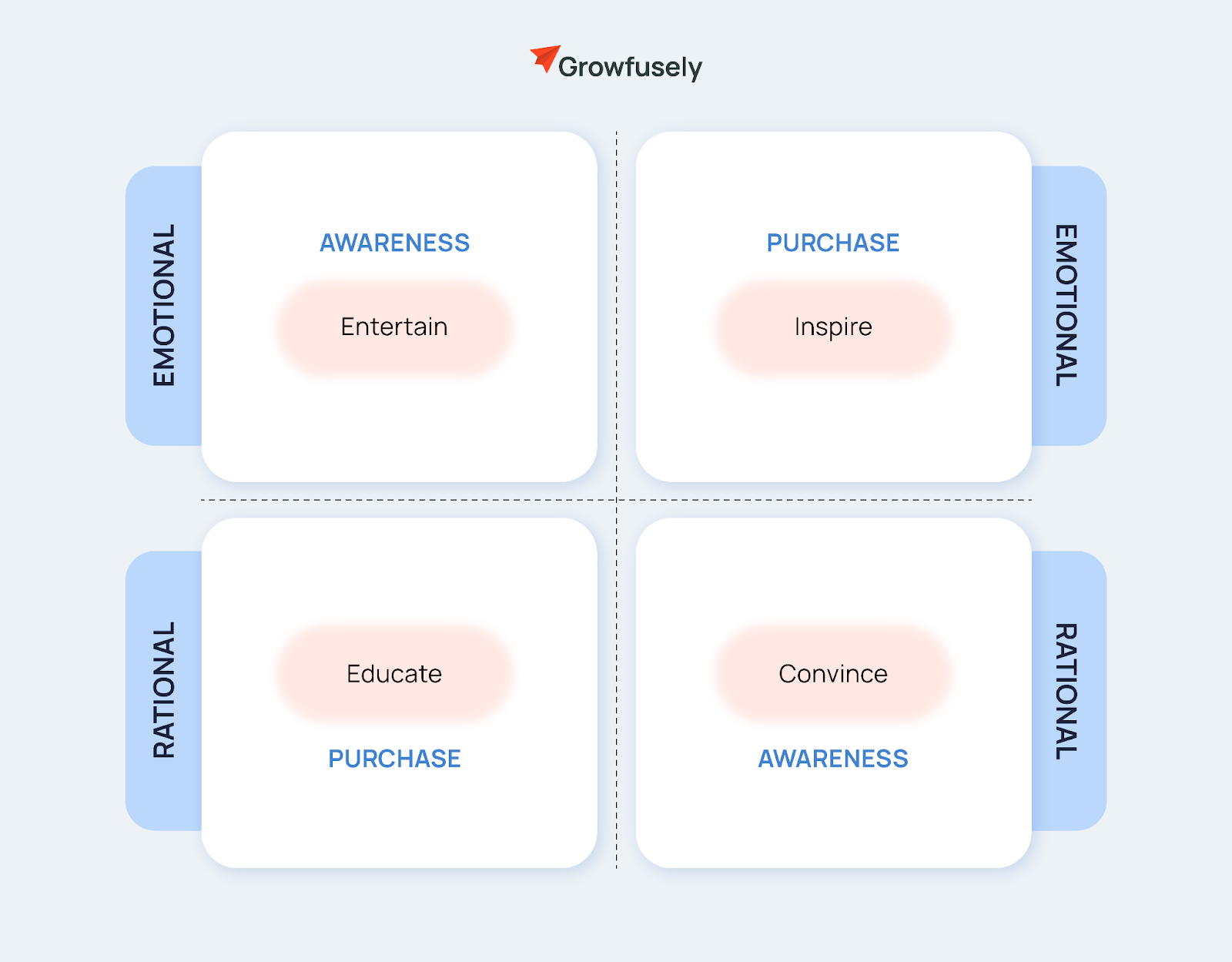
The first dimension assesses where the piece of content is in the conversion process (awareness or purchase).
The second dimension assesses the approach used to content with the target audience (emotional or rational).
If you map your content material on this matrix you’ll get a clear picture of your content efforts.
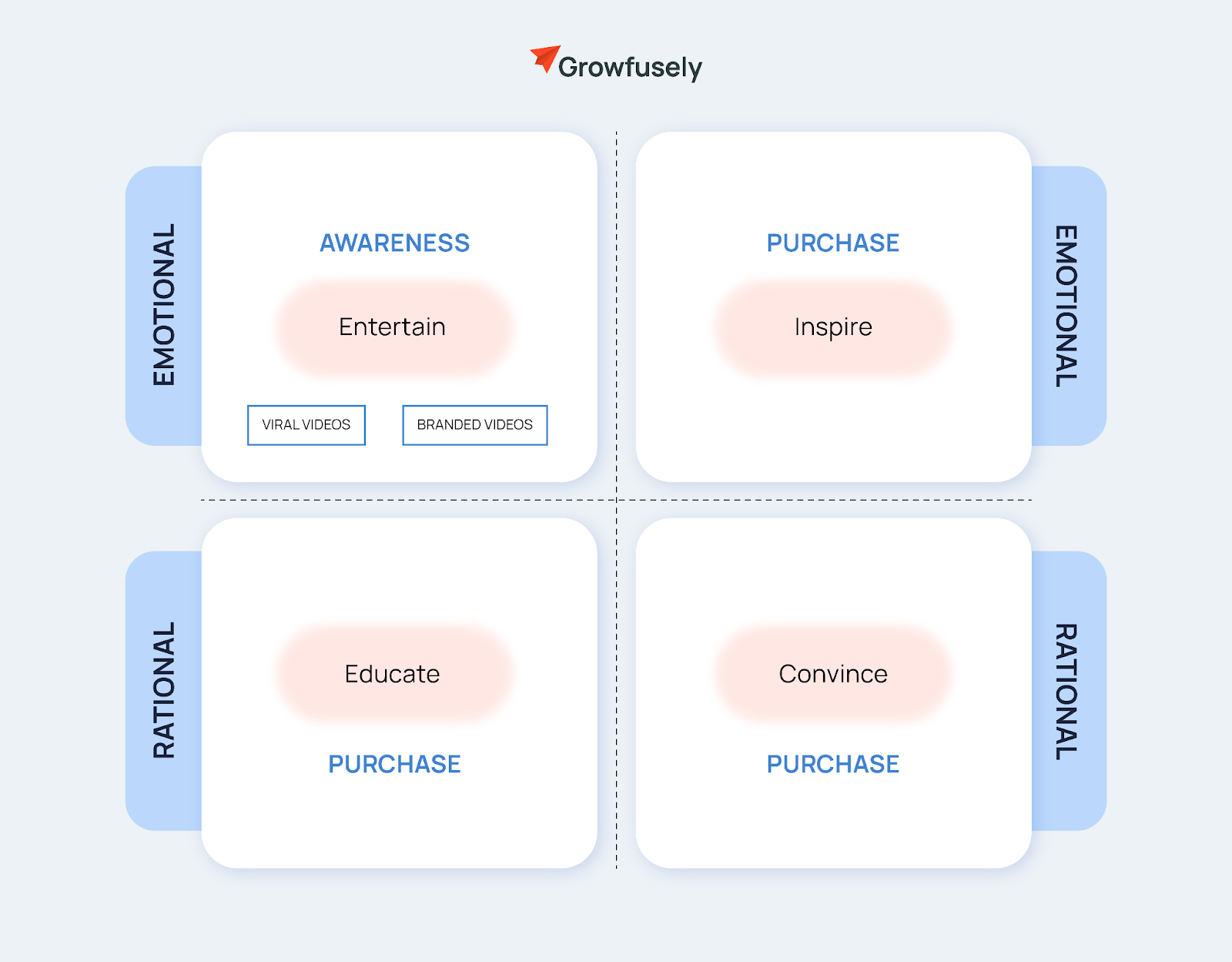
For instance, viral videos will feature in the awareness axis, at the emotional end of the spectrum. On the other hand, branded videos will stay on the awareness axis, but is less emotional.
Similarly, client testimonials will feature in the near-to-conversion (purchase) axis in the rational quadrant.
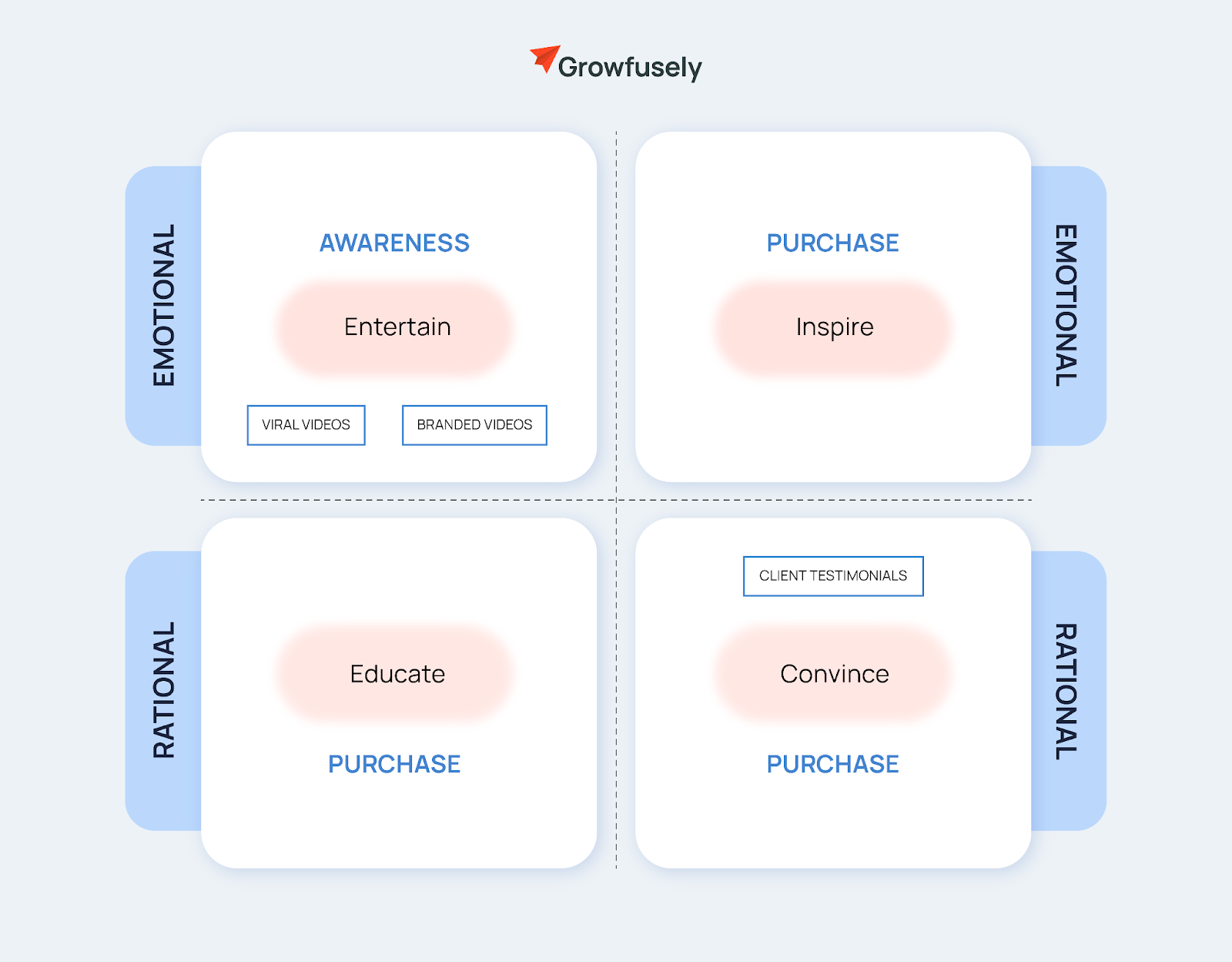
A content matrix is a complete content inventory that’s sorted by category. Hence, it allows marketers to evaluate their existing content and identify the weak points in their content strategy, thus making sure that their content aligns with audience needs.
Let’s say you are targeting 3 buyer personas. By mapping your material on this matrix, you may find that only one of them is getting a majority of the attention. This will allow you to create more content for the other two personas as per the stage in the buyer’s journey.
You’ve evaluated your current content inventory. You have crafted a buyer persona to outline their needs and pain points. Now it’s time to determine what type of content your audience will need at each stage of the journey.
A variety of formats (infographics, ebooks, motion graphics, and more) can engage audiences. Brainstorming the most effective way to present them can help you connect with your audience at different stages of the purchase process.
Content in the SaaS space is often seen as complex and dull. This makes it challenging for B2B SaaS marketers to engage their audience. Therefore, I advocate a blended approach using several content pillars. These can be mixed up to make your content informative, entertaining, and fresh.
Make sure you include these content pillars in your content mix.
Informative content adds value to the audience by allowing them to find solutions to their problems. FAQs, interactive tools, how-to videos, podcasts, and more raises awareness for a brand and are highly appreciated by SaaS buyers.
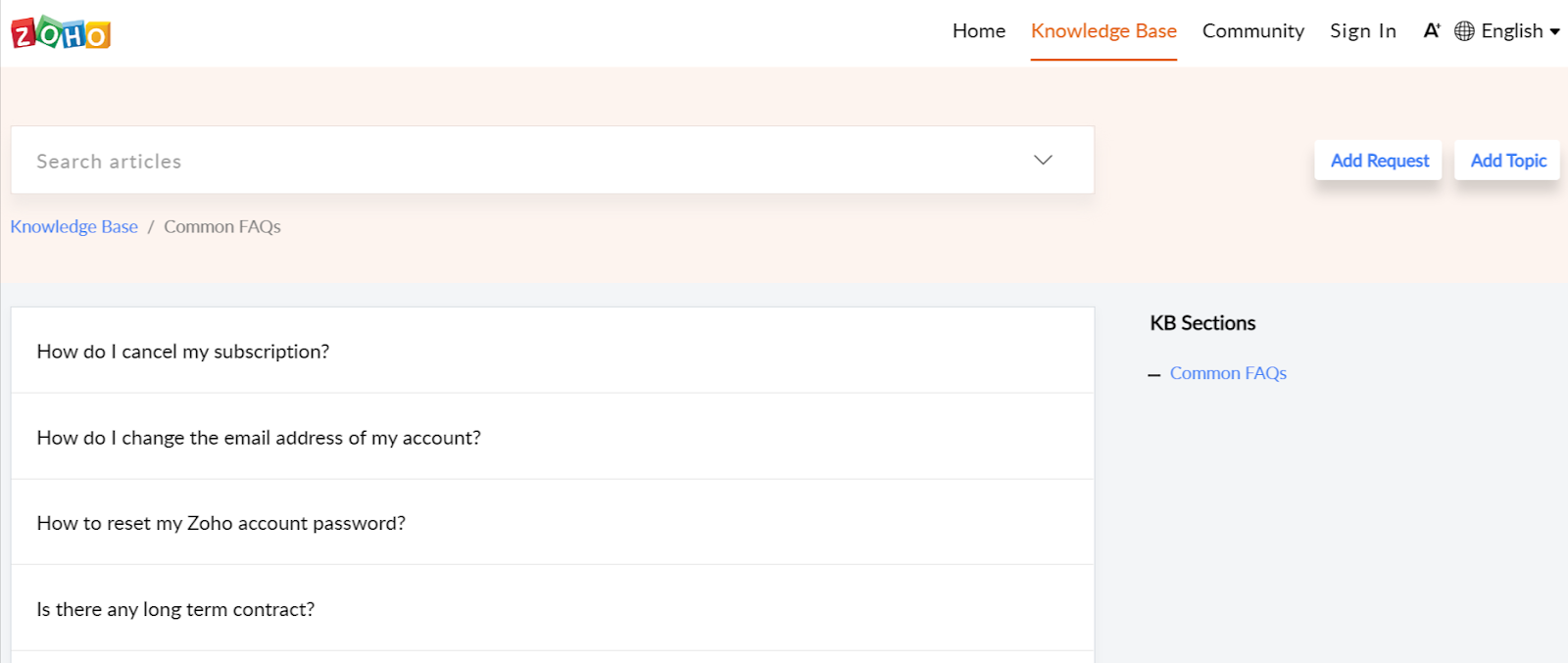
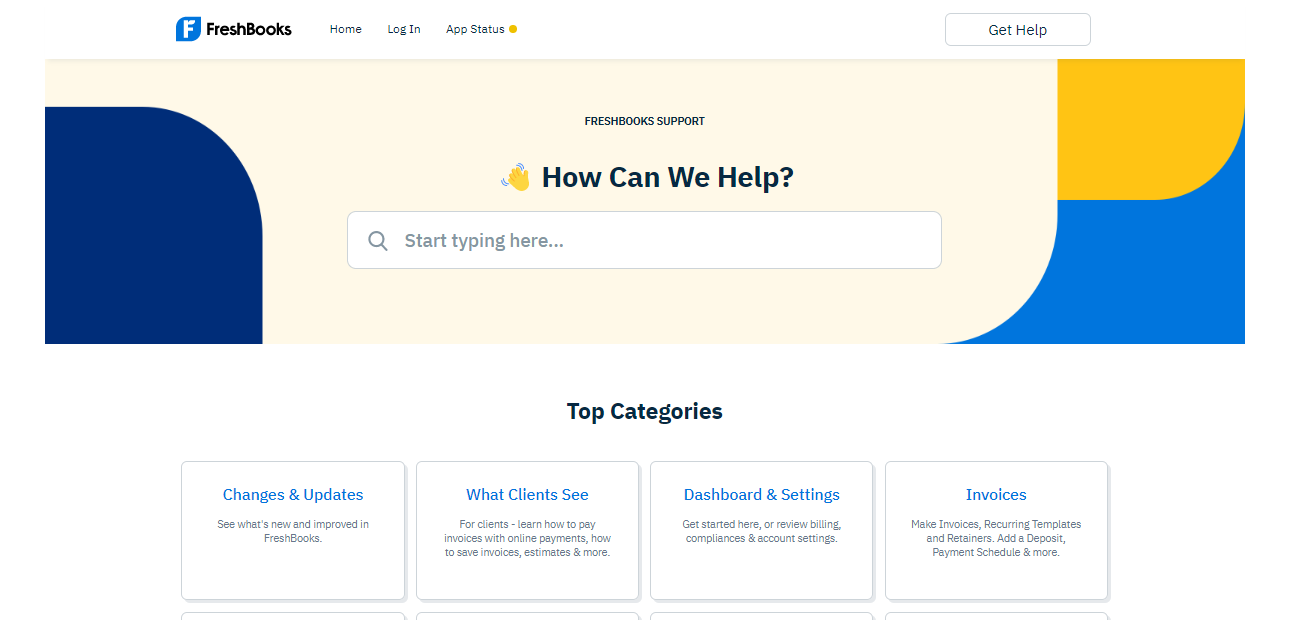
Check out how brands like Zoho and FreshBooks have dedicated pages with stellar content that informs their target audience.
Zoho has a knowledge base to educate its clients and prospects about its platform. Zoho goes a step further by allowing users to add a topic that could interest them.
Customers don’t just want to know about a product but also the brand story and the people behind it. People connect with and buy from companies they relate to. They want to resonate with the company’s ethics and values.
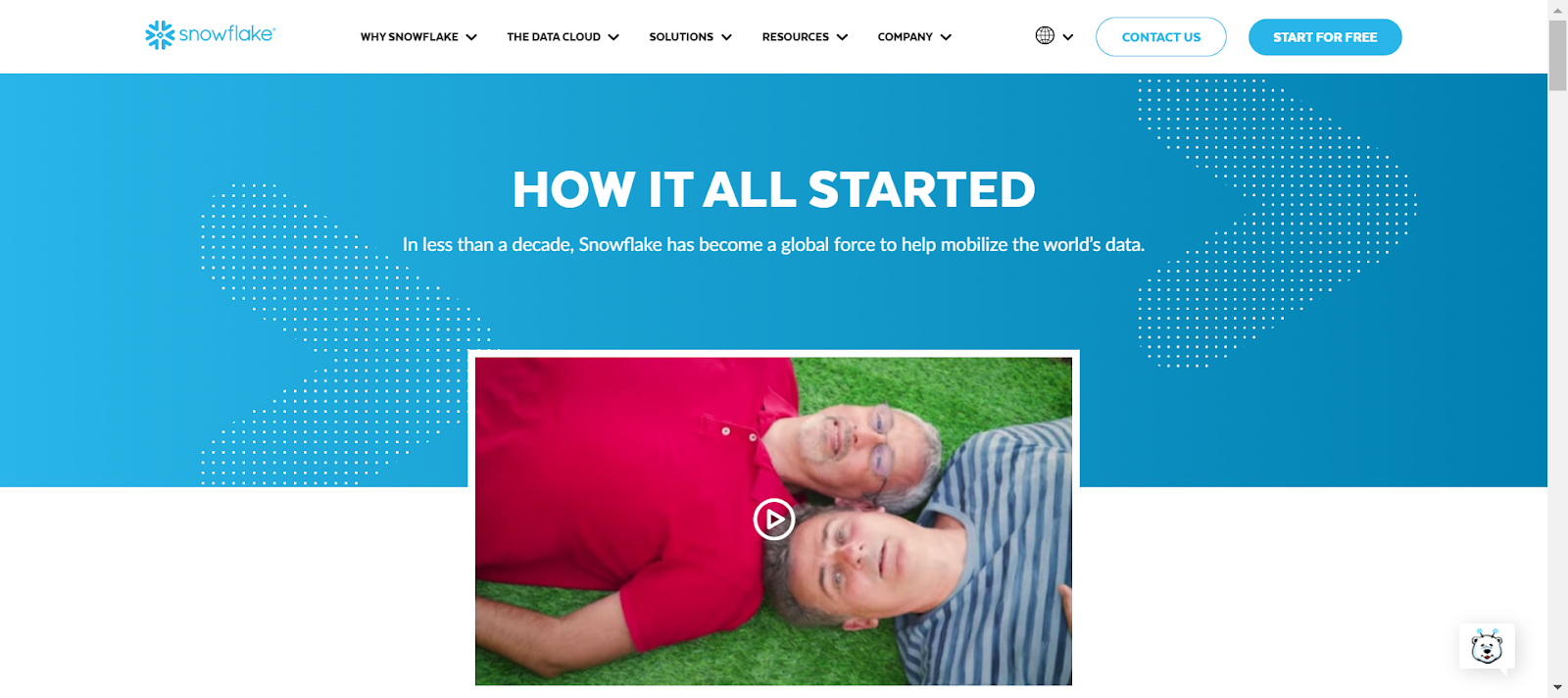
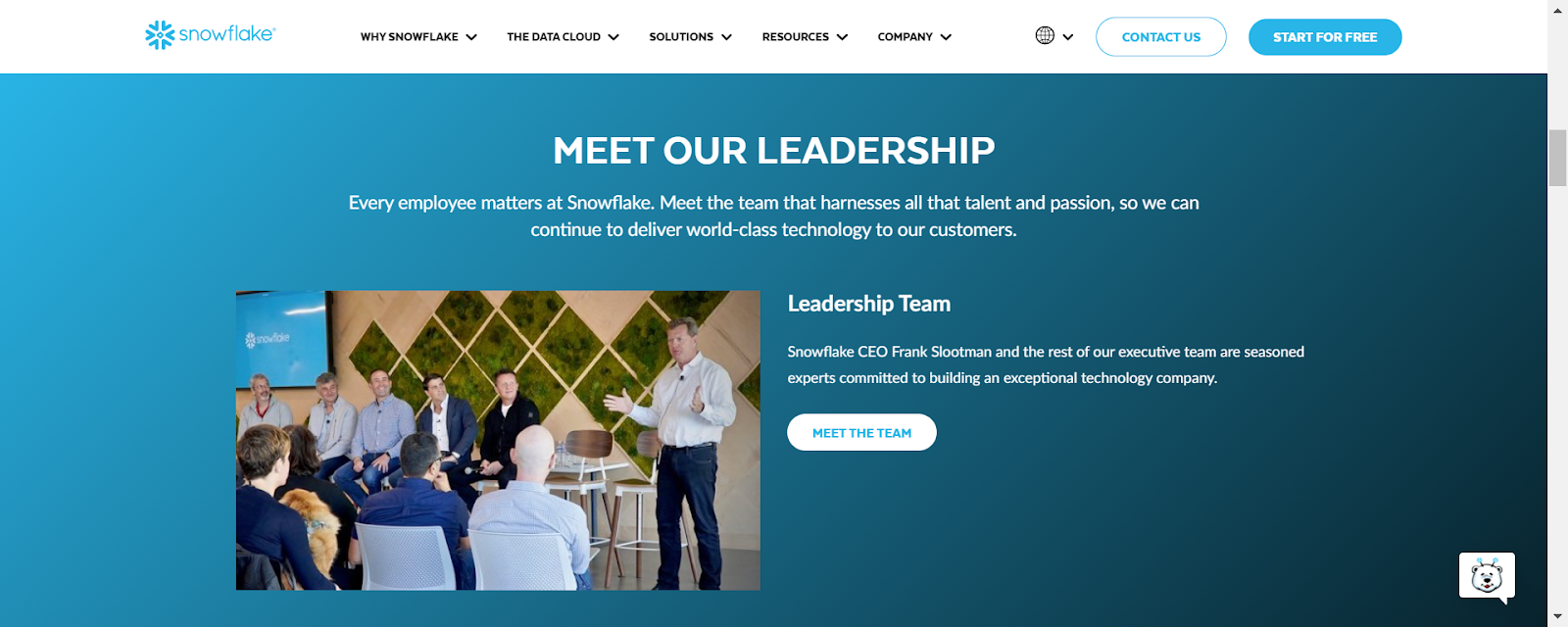
The About Us page is the perfect space to share a brand story and company vision. It helps in making your brand relatable as it shares your company’s motives.
Notice how Snowflake, a platform for data warehousing, data engineering, and data science, shares information about the company, its team, and its values, through video and written content.
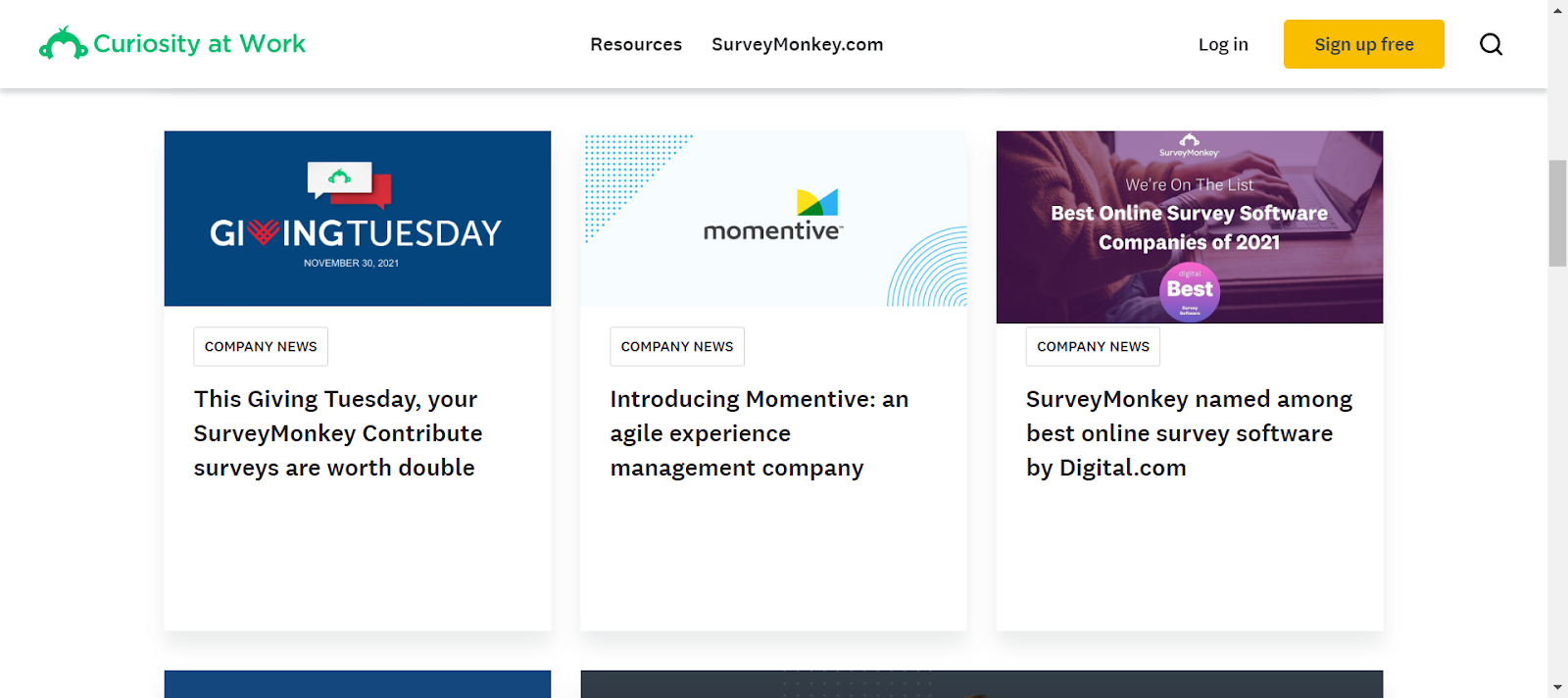
People like to be in the know. Whether you are participating in an event, releasing a new product or feature, or winning an award, they like to be updated with information that relates to them. Such information helps your audience feel involved and spreads the word that your business is an active contributor to the community and industry.
Notice how SurveyMonkey has a dedicated section on its website to share recent updates with its audience. Such content not just maximizes brand exposure but also keeps the audience engaged.
Not everything is about the product and its features. The modern SaaS buyer wants to experience the light-hearted and human side of businesses.
Make sure you occasionally add a hint of humor to your content. As long as it’s topically relevant and tasteful, it is sure to entertain your audience, thus building a strong relationship with them.
Asana, the CRM and project management tool, consistently shares content that its audience can relate to. Not only are their social posts humorous, they are also extremely timely and value-adding. They also share memes and gifs that sum up collective sentiments.


Building your content mix on the above-mentioned pillars ensures you offer a variety of content to the audience that guides them along the customer journey. It helps in conversions and brand advocacy.
Now that you are clear on the type of content you will create, it’s time to define the workflow and responsibilities. Here are a few questions that can help you.
Allocate roles for delivering individual content pieces. For instance, the content marketing manager will be responsible for delivering the content strategy and working closely with the content team.
Similarly, content writers will create content based on their expertise.
Work out a clear content production process. For instance, creating a blog post will involve –

Another step I would recommend here is creating a content calendar to offer clarity on what will be published and when. We will talk about that in the upcoming pointer.
Determine what resources will help you create content. For instance, in human resources will you count on in-house content creators or freelancers? Is there a need for specialists in podcasting or infographics?
Similarly, if you plan to go all out with video content, you’ll need hosting on platforms like Vimeo, YouTube, or Blubrry.
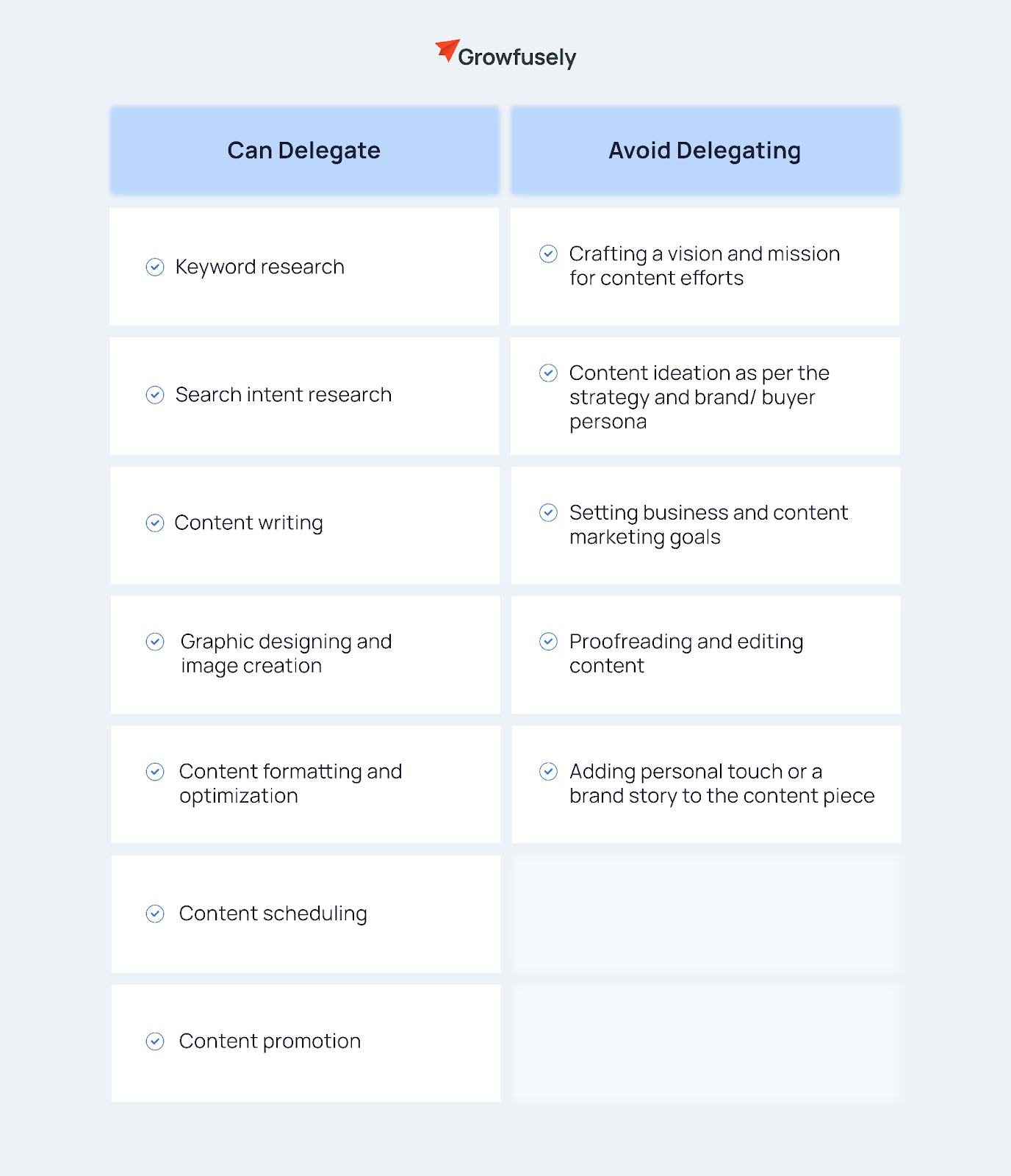
The time and effort required to create content can be overwhelming for content marketers. Hence, it’s wise to delegate certain tasks to professionals. At the same time, it’s important to remember that not every content strategy task can be delegated.
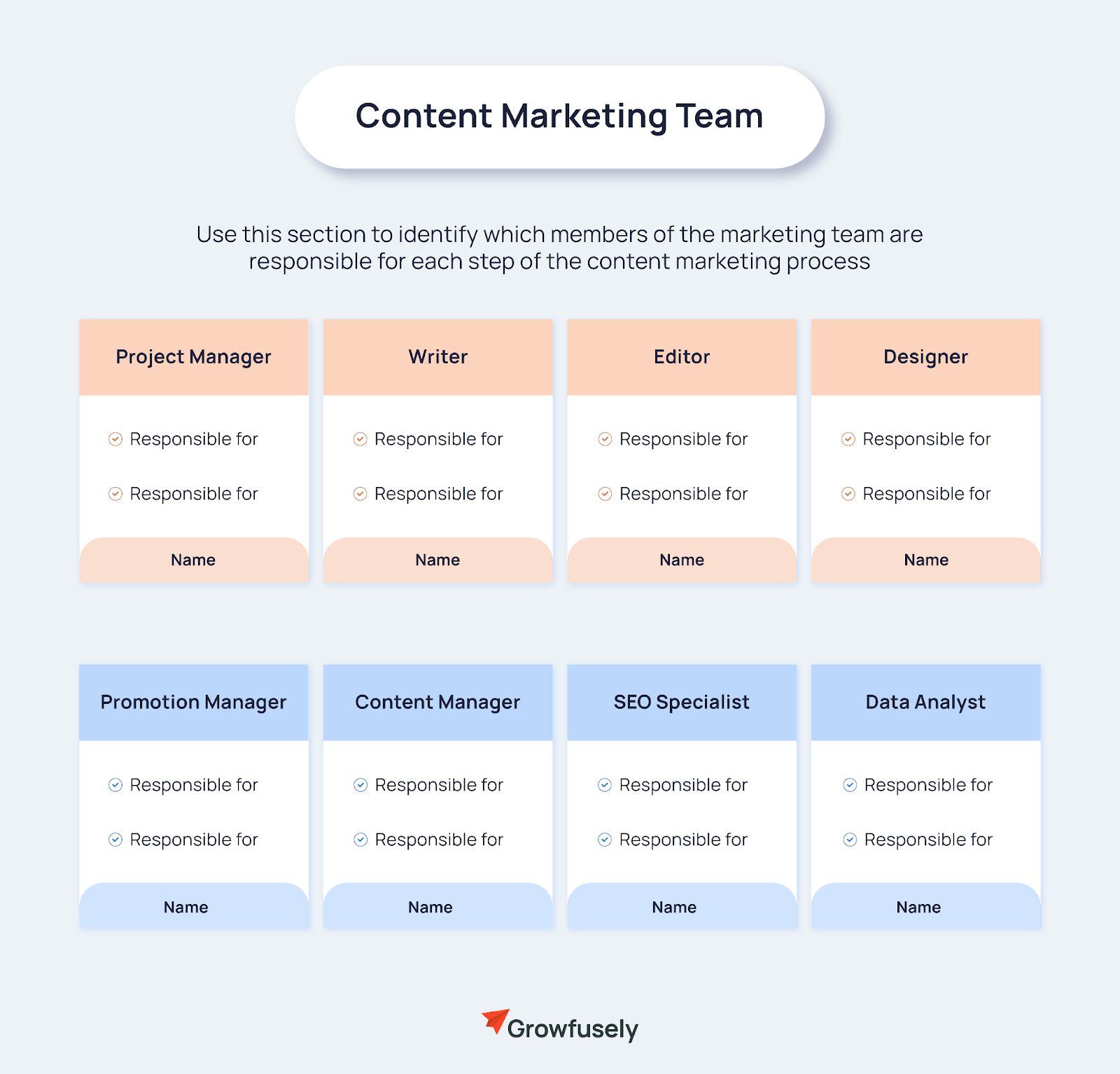
Each member of your content strategy team has a critical role to play. Make sure you have a list of people involved, what they do, and their roles. Add this to your content marketing template to clearly define responsibilities.
If you fail to plan, you are planning to fail. One of the top content marketing mistakes companies commit is churning out a specific number of blog posts in a week without having a specific plan. By doing so, they miss out on the overall purpose of the content they are publishing.
Businesses publishing impactful content consistently don’t just wait for inspiration. They organize ideas in the form of an editorial calendar or content calendar, a written content schedule. It helps bloggers and marketers to get an idea of the content creation workflow and the planned publication dates.
This graphic sums up the steps to creating a content calendar.
Based on these steps, here’s what your content calendar will look like.
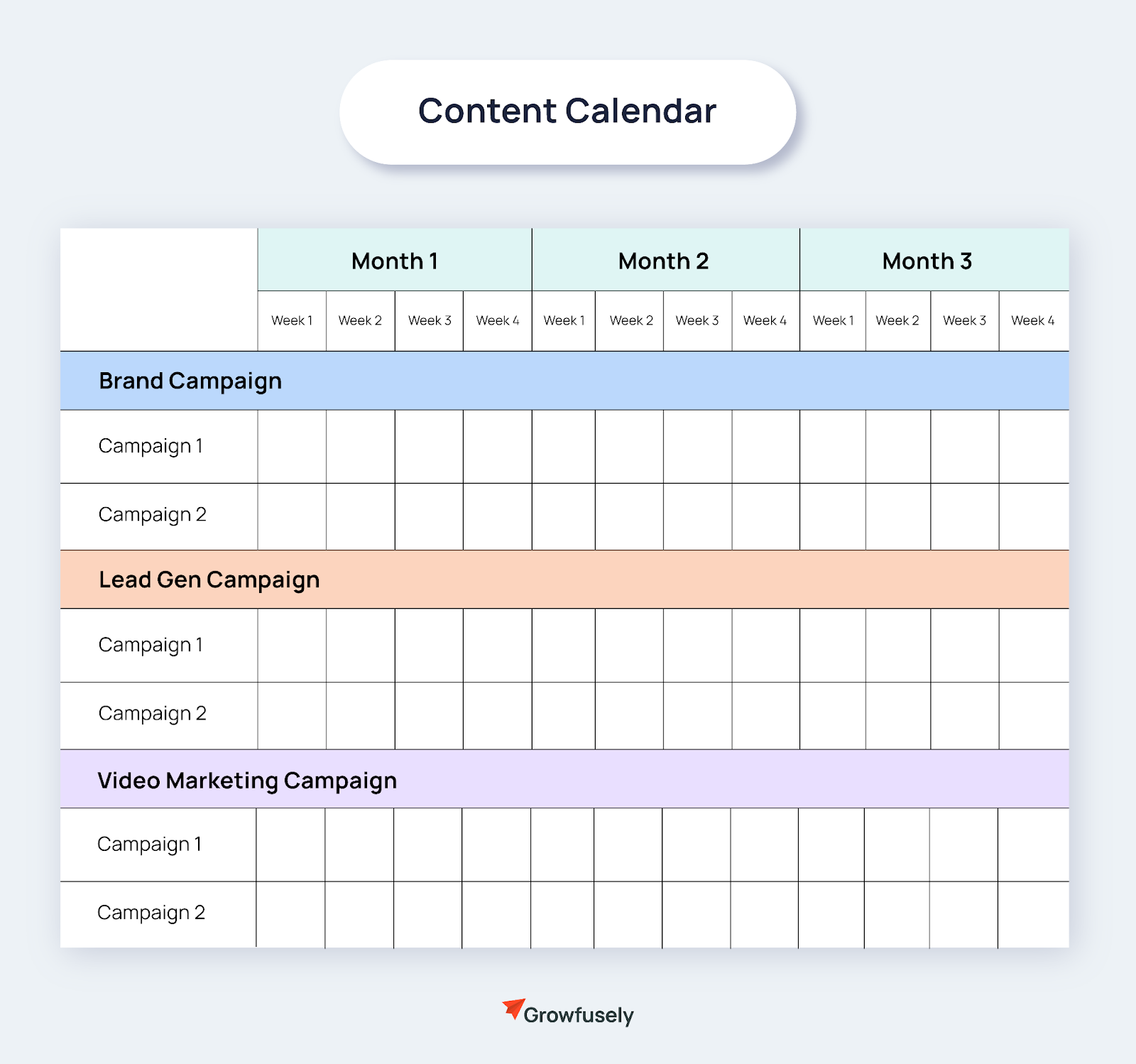
Further, for each piece of content, you need to include the following information.
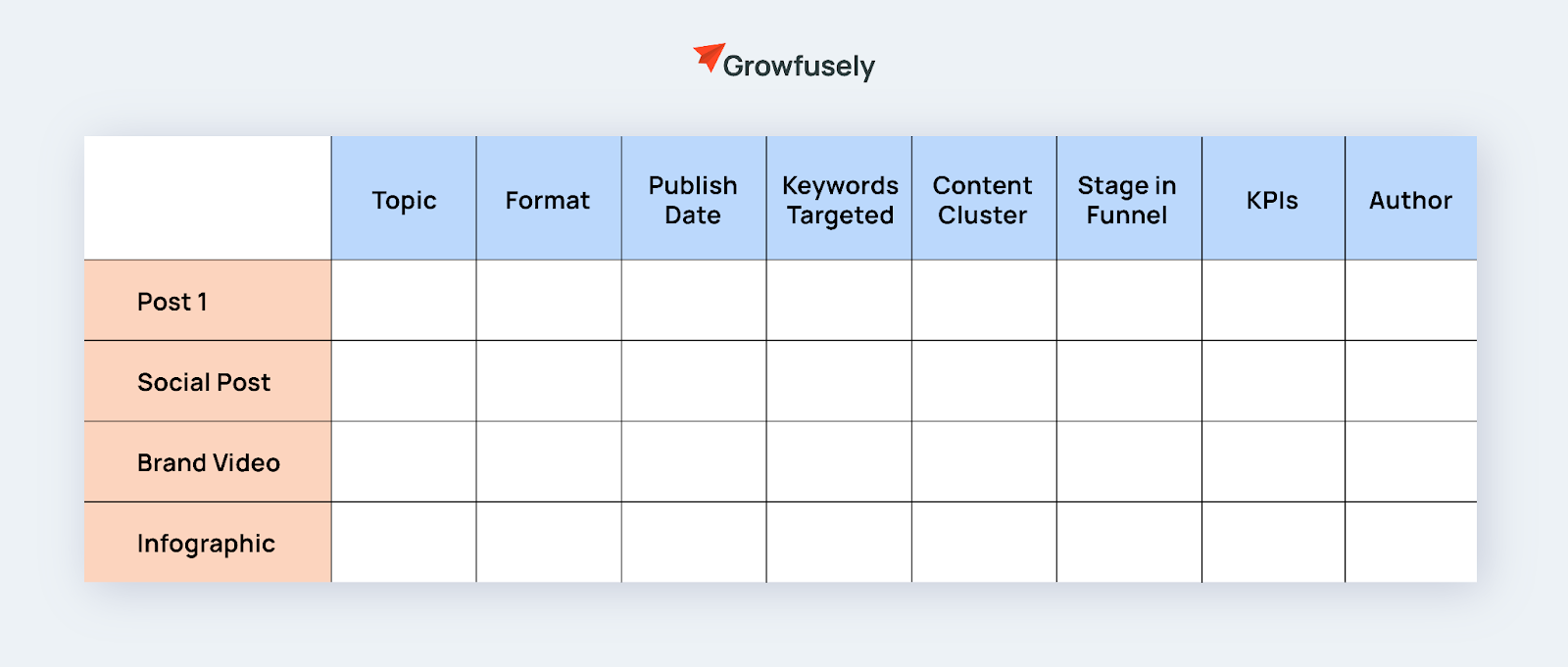
It is critical that your team sticks to this calendar. However, you must pay attention to the following pointers –
As you’ve known by now, before a piece of content is written a lot of prep goes into understanding whether or not the content aligns with the brand and buyer persona.
After the preparation and research done so far, most marketers have an idea of what format of content will work best for their audience. For instance, a certain segment of clients may be interested in list posts while others may prefer how-tos.
Now, it’s time to look at the content calendar and research what content will add value to your audience. This could mean checking out competitor content and crafting better content than theirs. It could also mean scanning through comments left on social channels to create content that answers people’s queries or concerns.
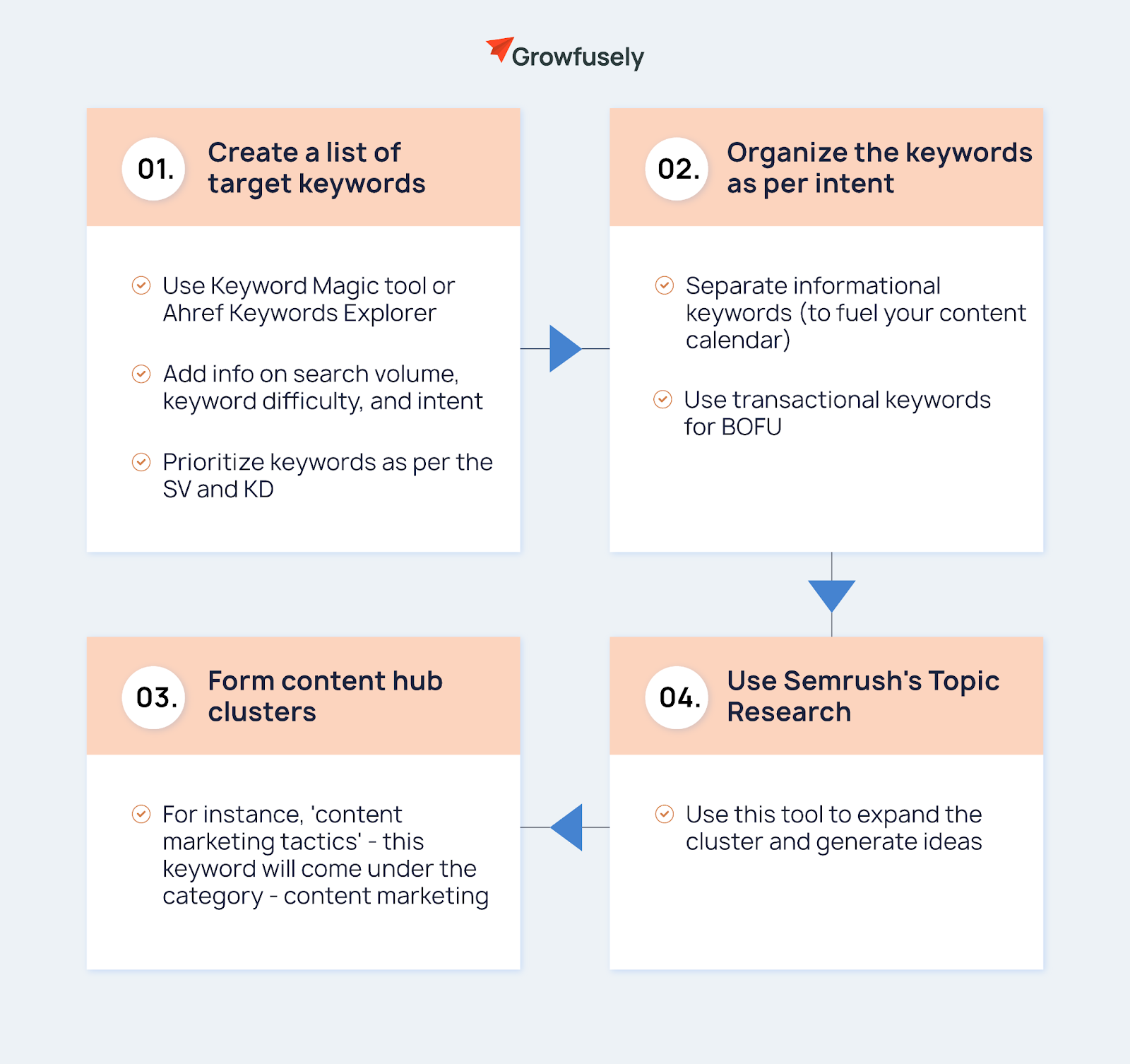
Include keyword research as a part of the research phase to optimize your content for search engines.
After adequate research, it’s finally time to write content that will wow your audience and position you as an authority in the segment.
Here are a few pointers to consider during the content production process. These tips will
To position yourself as an expert in a domain, you should prove that you understand your audience and their needs. The traditional keyword research that primarily focuses on vanity keywords and search volumes isn’t enough to achieve this.
Instead, focus on the intent behind each search query. Understand what the audience is looking for and offer a comprehensive answer to their query.
For instance, if the search query is ‘how to market a SaaS product,’ it’s obvious that the searcher is new to this topic and is seeking content that can guide them through the process. In such a case, it’s ideal to share a long-form guide that includes real-life examples, screenshots, and walkthroughs that add value to the searcher just like Sprout Social does in most of its guides.
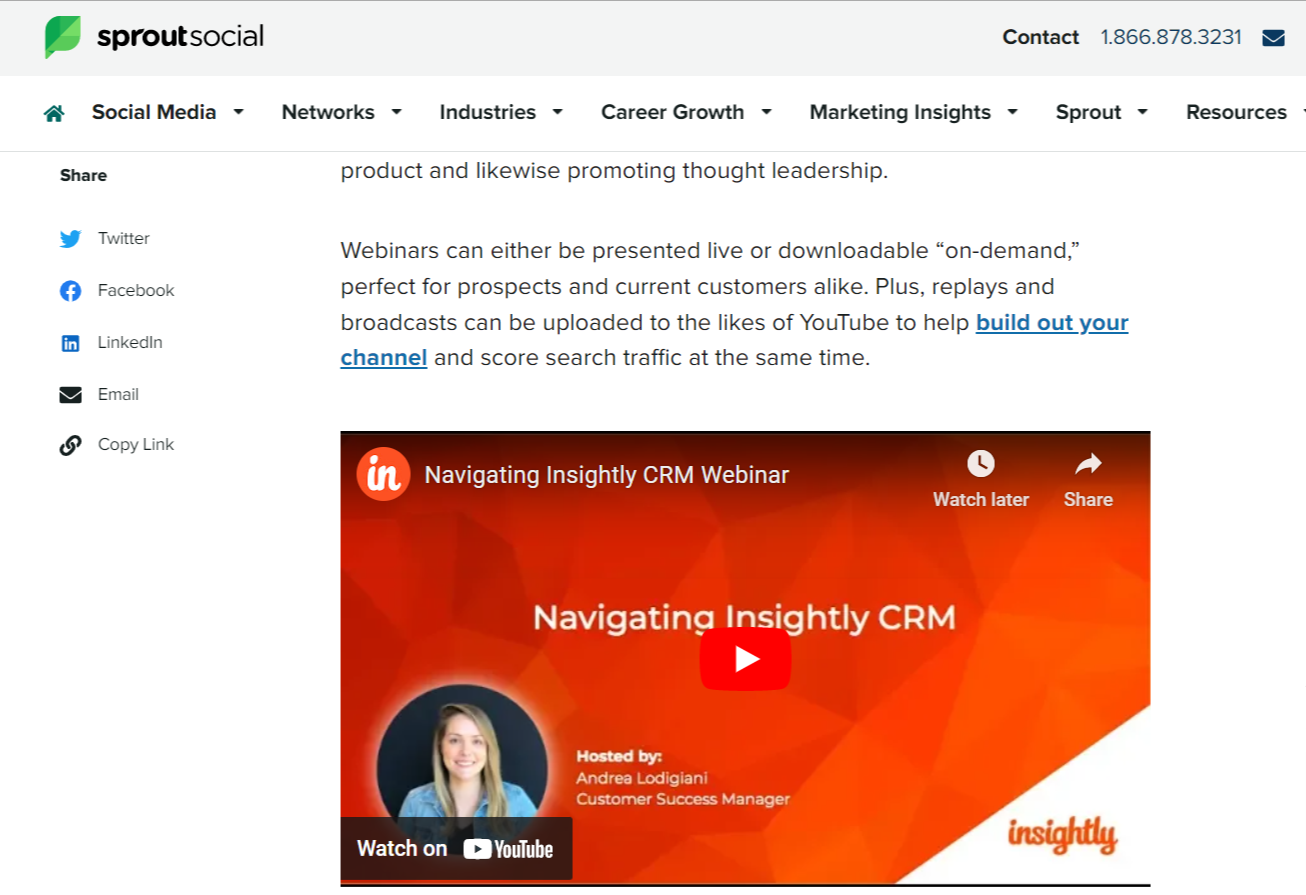
The social media management platform, not just shares relevant and up-to-date information but also anticipates what kind of information they may seek in the future.
Thus, the trick is not just to cater to the search intent but also to surpass customer expectations.
Google E-A-T (Expertise, Authority, Trustworthiness) clearly emphasizes the importance of content quality. Simply put, the content you share should –
Why should your readers trust the information and advice shared on your website? Audiences trust people who are an authority on the subject.
So, if a SaaS buyer making a buying decision needs to base their advice on your information, they need to see it as legitimate.
Giving trust signals to Google in the form of contributor credentials displayed on the website can boost your content’s level of expertise. Make sure you share details of the author, awards, and achievements to improve your expertise and trustworthiness.
Besides, you can collaborate with and create awesome content with industry experts and influencers to tell Google and your audience that you have experts contributing to your content behind the scenes.
If you aren’t fortunate enough to find the right influencers for your business, you can expand authority across the web by guest posting on authority websites.
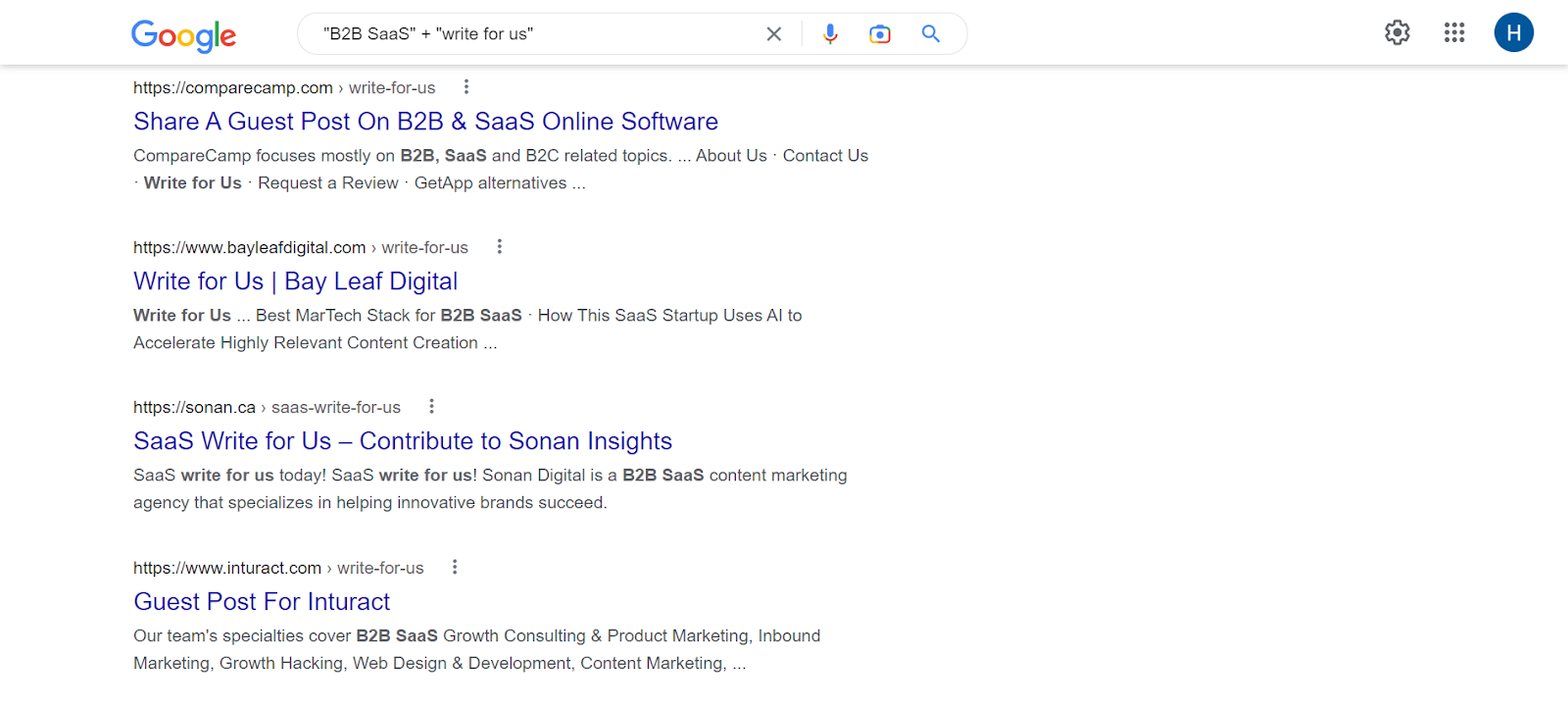
To find guest posting opportunities, all you have to do type in the keyword followed by “write for us.”
You can use MozBar to determine the Page Authority, Domain Authority, and Spam Score of any website or page.
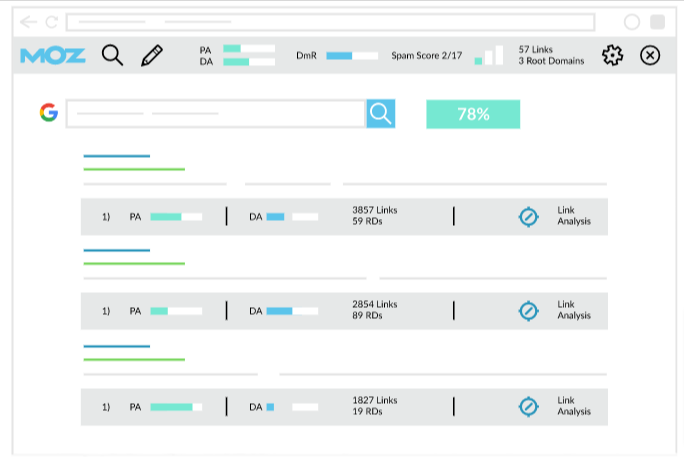
Guest posting earns you precious backlinks and mentions from authority websites, proving to be a huge indicator of your credibility.
Tip: We have a post on the best keyword research tools available out there to aid your SEO planning for B2B. These tools will help you find keywords as well as provide accurate data on important metrics.
A published post, regardless of how amazing it is, is just the beginning of the brand awareness journey. You don’t just want a content publishing plan, you want it to reach the right eyeballs at the right time.
Hence, it’s now time to plan how you will drive traffic to your content.
Here are a few tips that can help you.
For instance, LinkedIn is the primary social channel for B2B SaaS marketers who tend to have a highly relevant audience that’s already aware of their brand. 40% of B2B marketers surveyed indicated LinkedIn as their go-to channel for high-quality leads.
So, they may choose to share consideration and decision-stage content here.
Evaluate their appropriateness to your campaign based on factors such as domain and page authority, follower base, retweet-to-share ratio, and response ratio.
A few factors that will help you determine the right publisher for your content are –
By this stage, you and the team are well-informed about the objectives of the content campaign, the buyer persona, the market scenario, and more. It’s now time to briefly wrap up your content strategy and connect it to the business objective set earlier.
At this stage, you need to paint a clear picture of how your strategy will look and what outcomes you expect to achieve once it’s implemented.
An executive summary is what a TL;DR is for a long-form post. After putting a stellar content strategy document together, it’s only wise to add an executive summary at the beginning that will help the reader get the gist of your vision and efforts.
That way, whoever’s reading your strategy doc will be floored by the amount of effort that’s gone into it and the clarity of thoughts. The executive summary should precisely answer these questions –
Building a foolproof content marketing strategy may seem like a daunting task but once done it will reap you rewards for several years to come. The more effort you put in at this stage the more authority, traffic, and revenue you’ll get.
So, bear these best practices in mind when commencing your journey. These will help you refine your strategy over time.
Improvements in technology and its accessibility has made it easier for SaaS businesses to innovate and improve existing product functionality. Thus, they need to consistently improve customer value.
The pressure has made it challenging for SaaS businesses to create and maintain a marketing edge. For this, they need to understand your audience inside out.
It may seem that SaaS businesses target similar audiences, but that isn’t the case. The differences are tough to spot because there’s always a reason why a buyer chooses to engage with a brand.
And a majority of SaaS buyers check out multiple competitors before making a decision. Hence, you need to give them a reason to choose you. That’s why it’s important to determine your edge.
Data-driven marketing decisions powered by embedded analytics offer a specific marketing edge to businesses, setting them apart from the competition. When data is embedded into the SaaS product you can boost customer value and customer experience and maintain an edge over competitors.
If you’ve been in the SaaS space for a while, it’s likely that you have a lot of content out there in the form of podcasts, videos, or blog posts. Hence, a critical step here is to assess whether or not this content is steering you toward your business goals.
Conduct a content audit to answer the following questions –
The outcomes of a content audit help you assess the success of your content strategy and the content development process.
Here are a few steps you should follow to audit your content.
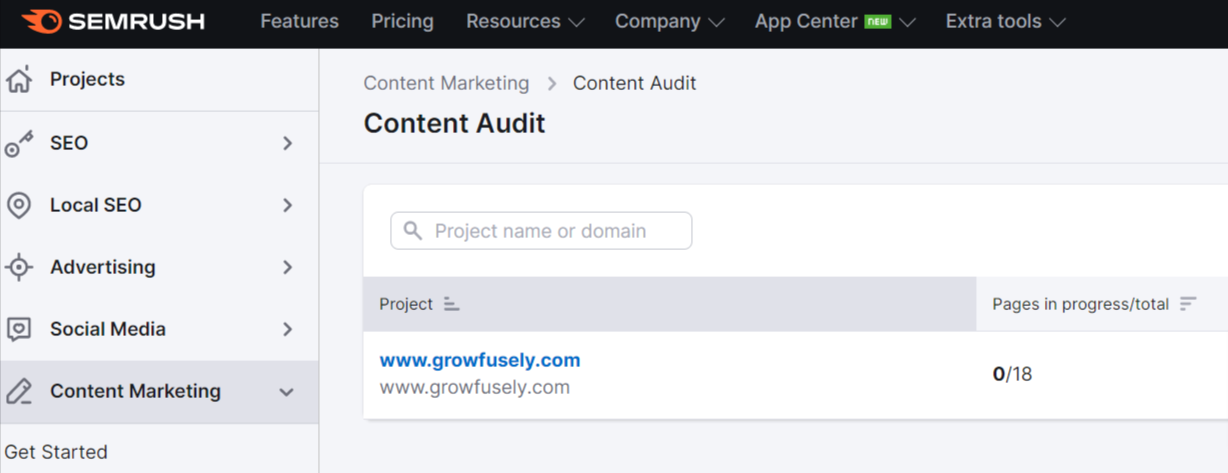
Take note of all your content and URLs for internal content (posts, news, product descriptions, landing pages, and more) and external publications. Tools like Semrush Content Audit can quickly audit your site’s content and share a list of URLs using the sitemap data. Connect this to Google Analytics and Google Search Console and you get to track each URL with sessions, page views, bounce rates, and more.
Next, it’s time to catalog your content based on categories like the buyer’s journey stage, the content type and format, the content length, the content hub, the author, and the date of publication.
It’s now time to assess your content and decide whether to keep, update, or remove it.
Once your ‘Keep’ and ‘Update’ list is sorted, organize the pages as per these actions.
If there’s a performing post that may perform better if converted into an infographic or an ebook. .
If there’s a piece of content that’s not performing as per your expectations, consider rewriting it by adding a few real-world examples or practical tips.
If you have a short piece of content on a topic that otherwise demands data, consider adding information to convert it into long-form content. Or maybe you have two or three pieces of content that could be combined into a long-form post.
At times, a piece of content could do better when you update it with fresh data like recent statistics, new product features, or the latest trends.
Does your content lack an SEO-friendly structure? A logical structure not just improves UX but also helps search bots to better understand your content. Add relevant H2 and H3 tags to improve the structure of your content.
If your content holds outdated banners, it’s time to replace them with recent offers. This will go a long way in improving your conversion rates.
Adding videos, images, and screenshots to the content makes it more engaging, relatable, and trustworthy. Further, visuals increase the chances of your page appearing higher in the search results.
Some posts may require updating links pointing to the new articles on your blog.
When performing the content audit don’t lose sight of the long-term strategy. Use the results from this audit to steer your content marketing strategy for better reach and conversions.
A recent report by Semrush revealed that, regardless of the industry, organic traffic accounted for up to 80% of the total site traffic. In fact, another report shares that organic search is a dominant source of trackable traffic. And B2B and tech companies earn 2X more revenue from organic search than any other channel.
Thus, your content strategy should focus on SEO while sharing content that’s authentic, value-adding, well-written, and credible. Here are a few points you should bear in mind when optimizing your content for organic search.
Internal linking is one of the most trusted SEO tactics that can make your pages rank easily and strengthen your authority in the domain.
On one hand, effective internal linking helps site visitors navigate effectively through the website, thus improving UX. On the other hand, it allows the search bots to better understand your content and its context.
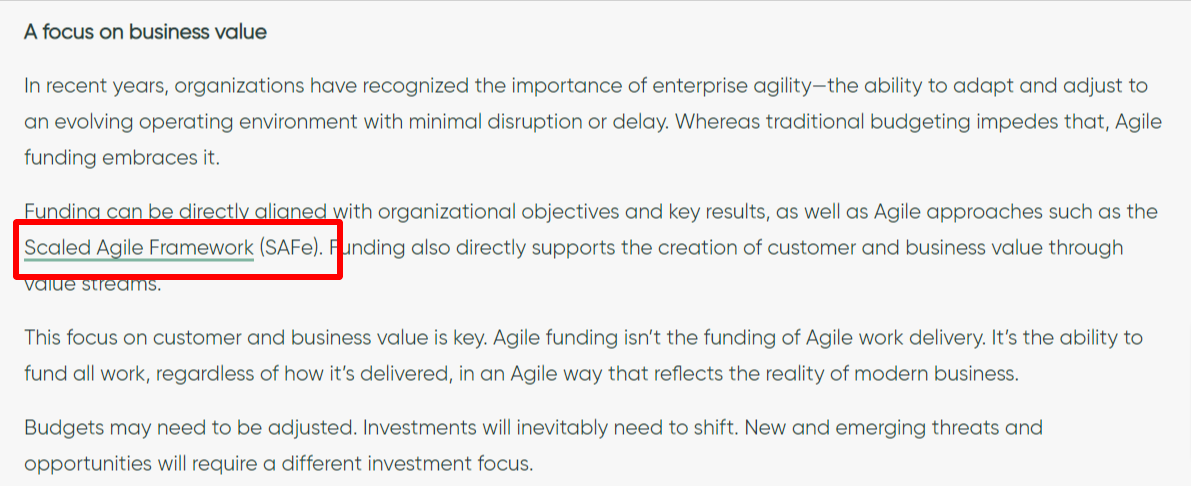
For instance, ServiceNow, an American software company, wrote on ‘agile funding’ but has linked to a related topic ‘scaled agile framework’ that may interest the reader.

Building a solid content strategy to consistently deliver high-quality content to your audience at scale isn’t a cakewalk. That’s where automating processes can help.
Marketing automation not just helps in optimizing resources and growing revenue but also allows you to keep a track of content across channels till it is delivered to customers.
What’s more? It helps in monitoring key KPIs to give you an idea of how the campaigns are performing.
Here are a few content marketing tasks that you should consider automating.
Content teams can manage their workload by creating systems and workflows using tools like IFTTT. This workflow automation tool allows you to simplify tasks in the content creation process and eliminate repetitive elements that bring down productivity.
The tool also lets you connect your online accounts (social, Google Calendar, Gmail, and blogs) and set up condition statements that can trigger automation.
While implementing the content strategy you’ve just built is tough, keeping a track of its progress just makes the job tougher. Hence, it makes sense to automate reporting and analytics using tools like Google Analytics that spot the content that’s getting attention and traffic. The tools allow users to set up custom reports to automatically send updates on the data they are looking for.
Email is one of the most effective channels when driving lead-to-customer conversions. Automation allows businesses to send tailored content to leads based on their interests.
All you need to do is count on an email automation software Encharge, Mailchimp, or Drip that allows you to garner and follow up on leads through custom emails.
Consistency is key in social media marketing. You need to show up each day across channels with fresh and engaging content. Automated social publishing allows you to share your content at the best time of engagement.
Tools like Hootsuite, Buffer, Zapier, and others can bring it the much-needed efficiency needed to reach your audience.
Though the quality of content matters when it comes to ranking in the SERPs, ranking for important keywords can be the difference between a conversion or abandonment. SERP position tracking tools like Semrush and SERPWatcher alert users of changes in the ranking of a content piece, allowing them to take the necessary steps.
Finally, it’s critical to measure the impact of all the efforts you’ve put in when building and implementing the content marketing strategy. Pick the KPIs that give a clear picture of whether or not your strategy is helping you hit targets.
To precisely measure your content efforts and determine the content marketing ROI, look at four categories of metrics.
These metrics measure how your audience is interacting with or consuming content. Are they just viewing/ listening to your content or clicking on the call to action? Are they downloading your gated content?
Consumption metrics allow marketers to measure the level of engagement, brand awareness, and website traffic a business generates through content. Here are a few prominent metrics.
This metric shows how resonant your content is. Is it generating enough interest for being shared? How often is the content being shared?
Simply put, share metrics tell you if your content is achieving two goals – brand awareness and engagement.
The top sharing metrics you need to consider are –
Tracking these metrics helps answer the question all B2B marketers are seeking answers to –
How often does a piece of content result in a qualified lead?
These metrics allow you to measure your lead gen, management, and nurturing efforts. Here are a few critical metrics to include in this category –
Email engagement should be tracked through open rate, CTR, bounce rate, and unsubscribe rate. Tools like SendPulse allow you to check these metrics, thus improving the effectiveness of your email campaigns.
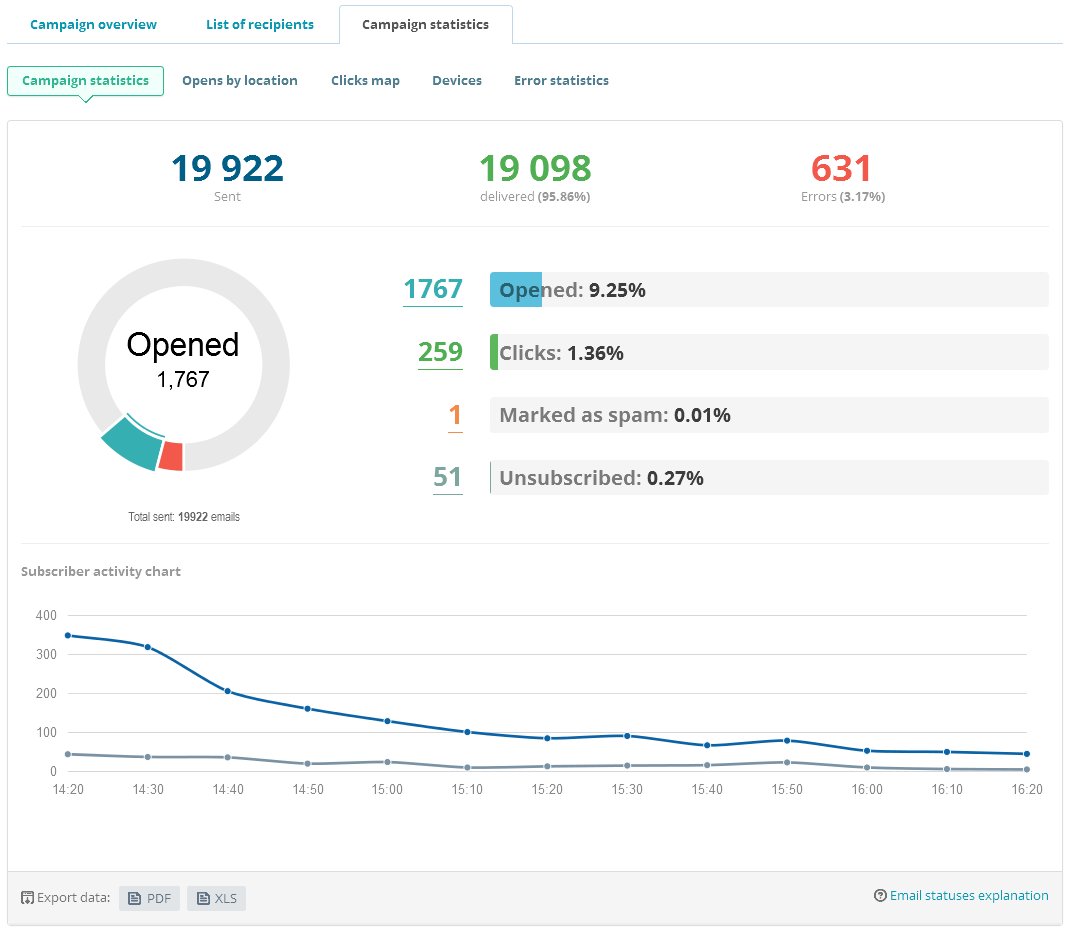
All your content and marketing efforts revolve around generating sales. Measuring sales metrics addresses the question –
Did our content make money for the business?
And now, as promised! Here is the Content Marketing Strategy Template you can use to build a power-packed strategy for your SaaS business.
https://docs.google.com/spreadsheets/d/1sjm6t6HjwbHj29W_imrXMX5r1mPzD3DaUhMfePMXXFE/edit?usp=sharing
Content marketing is a long-term game of attracting and retaining customers. As a SaaS business, you need to put in adequate time and effort to nurture your leads through every step of the buyer journey.
This is possible only if you have a clear roadmap of what your audience expects and how your content can help solve their problems.
Implementing the above-mentioned steps and organizing the template provided is the first step to powercharging your content efforts. However, implementing these tactics and leveraging the resources provided can prove to be a big hurdle.
That’s where we come in! If you are ready to attract incremental traffic and leads to your website using quality content, get in touch with team Growfusely. Set up a quick consultation with us and we will share a complete road map on producing winning content that wins more customers each day.
Content marketing strategy is a narrower version of content strategy. It is a narrow discipline of marketing content where a business plans to build an audience by sharing, maintaining, and promoting content that educates, entertains, and inspires them. The ultimate aim is to improve brand image, convert followers into loyal customers, and boost sales.
Regardless of what format you choose, your content marketing strategy should answer these questions –
In 2021 and beyond, content in the SaaS space continues to evolve. Hence, content marketing forms the foundation of a SaaS firm’s inbound marketing strategy.
One of the most important business goals for a SaaS firm is to drive brand awareness among its target audience. A clear content marketing strategy is critical for SaaS businesses because it allows SaaS companies to define their vision, marketing goals, and priorities.
The result of implementing a robust content marketing and SEO strategy is improved brand awareness and customer trust and an edge over the competition.
Further, enough research has proven that companies with a content marketing strategy experience a 30% higher growth rate than those that don’t.
From the time you start executing the strategy, it could take anywhere from 3-12 months to move the needle. Many of our clients have seen growth in their traffic, conversions, and revenue, as early as 3-4 months.
However, this uptick is influenced by several factors –
Once you build a content marketing strategy, it’s important to stick to it, especially during the first year. If you want more information on returns from a content marketing strategy, read our post here –
How to Measure Content Marketing ROI: Formulas, Tips, Resources, and Processes
By putting in adequate research and building a sound content strategy, you can generate a steady stream of new leads for your SaaS business. Whether you share blogs and videos or high-level content like white papers and case studies, your content assets act as lead magnets, thereby introducing prospects to your sales funnel.
As your leads discover the high-quality content you share consistently, they will continue to engage with your channels and eventually convert into loyal customers.
One of the biggest content mistakes SaaS firms commit is diving straight into sharing content without building a coherent content marketing strategy. Launching a blog and sharing content consistently on it without putting thought into what you want to achieve will not get you anywhere.
Like any other form of marketing, you need to set clear expectations for your content marketing efforts. You need to understand your audience, the type of content they prefer, and how you can add value to their business.
Get the finest guidance in content writing and strategy, delivered straight to your inbox.
HNW clients are asking AI tools to recommend financial advisors. Most practices don’t appear. This guide explains GEO and what it takes to show up.
Business owners are asking AI tools to recommend accountants. Most CPA firms don’t appear in those results. This guide explains GEO and what it takes to change that.
Author Hazel Kamathi is a Senior Manager - Strategy and Ops at Preceptist, a leading content writing agency.